Best Espresso Grinders of 2026: Single-Dose, Quiet Hopper & GBW Picks (11 Models)
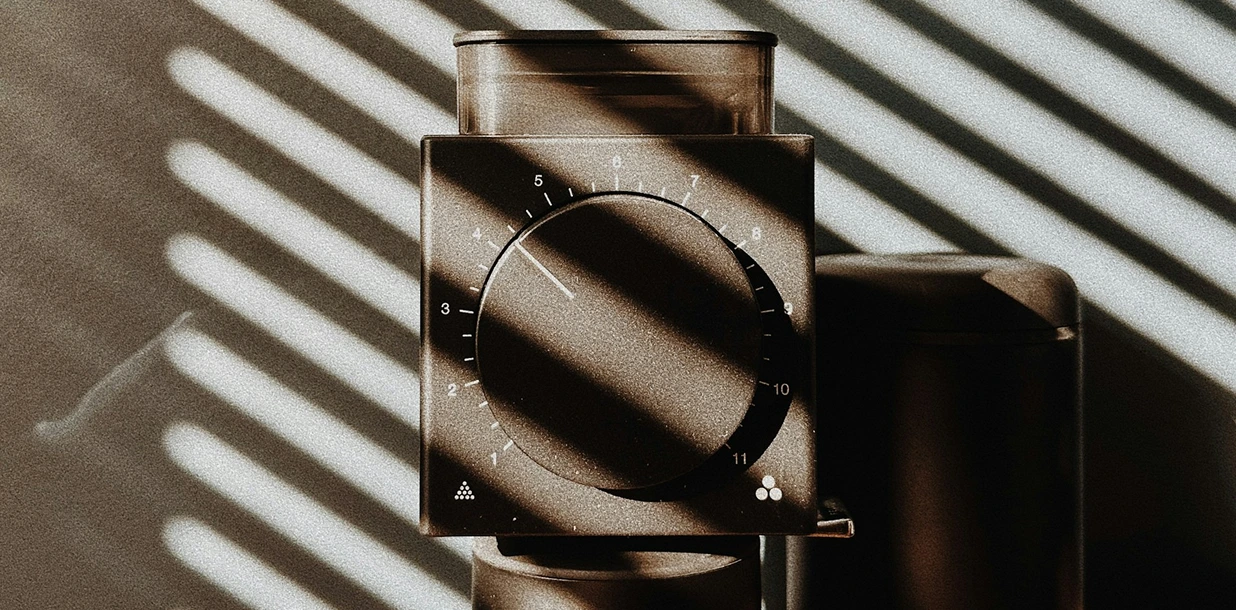
In 2026, the grinder is still the tool that decides whether your espresso is repeatable or random. This guide is built around real home workflows: single-dose freshness, quiet hopper convenience, grind-by-weight dosing, and high-value hand grinding.
Quick Picks: Best Espresso Grinders (2026)
Each pick matches a different routine: budget learning, clean single-dosing, “set it and repeat” hopper convenience, quiet kitchens, or weight-based dosing for consistency.
-
Best budget espresso starter (easy learning curve): Baratza Encore ESP
↓ Jump to Review -
Best budget flat-burr single-dose: DF54
↓ Jump to Review -
Best affordable “espresso + brew” electric: Fellow Opus
↓ Jump to Review -
Best mainstream convenience (timed dosing, broad range): Breville Smart Grinder Pro
↓ Jump to Review -
Best value single-dose upgrade (64mm flats): DF64 Gen 2
↓ Jump to Review -
Best single-dose versatility (variable RPM): TIMEMORE Sculptor 064S
↓ Jump to Review -
Best quiet hopper espresso grinder: Eureka Mignon Silenzio 55
↓ Jump to Review -
Fastest low-waste hopper workflow: Baratza Sette 270
↓ Jump to Review -
Best grind-by-weight (GBW) dosing: Baratza Sette 270Wi
↓ Jump to Review -
Best hand grinder for espresso precision: 1Zpresso J-Ultra
↓ Jump to Review -
Best value hand grinder for espresso: KINGrinder K6
↓ Jump to Review
Most “best grinder” lists quietly assume you want the author’s routine. That’s the mistake. In real kitchens, the best grinder is the one that fits your day: do you switch beans, do you want the quietest setup, do you want one-button dosing, or do you want maximum value?
This shortlist is intentionally practical. You’ll see what each grinder does well, where it compromises, and who should skip it. Availability and prices change, but the workflow logic stays the same.
How to Choose an Espresso Grinder (Barista Logic)
Espresso grinders look similar on paper, but they behave very differently on a real countertop. The fastest way to choose is to decide what you want your daily routine to feel like, then pick the least annoying grinder that can still dial espresso precisely.
- Single-dose vs hopper: single-dose is ideal if you switch beans often and want freshness; hopper grinders are faster if you drink the same espresso daily.
- Adjustment style: espresso needs small changes. Stepless is naturally suited to that; stepped can still work if steps are fine enough in the espresso range.
- Static + mess: messy dosing becomes inconsistent dosing. Look for anti-static design (and plan to use a dosing funnel and WDT if your grinder clumps).
- Noise: if you live in an apartment or share a kitchen, noise can matter more than burr size.
- Support + maintenance: grinders drift when oils and fines build up. Pick a model you can clean and keep consistent over time.
Practical rule: if espresso is your main drink, prioritize espresso workflow first. If you also brew filter coffee, decide whether you want one “good enough” grinder for everything or a dedicated espresso tool.
The Shortlist: Best Espresso Grinders of 2026
These 11 picks are organized around real use cases. Each section covers what the grinder is best at, what compromises it makes, and who should skip it.
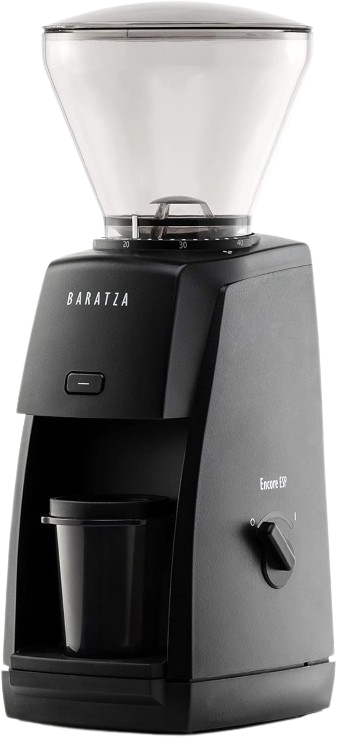
1) Baratza Encore ESP — Best Budget Espresso Starter
Encore ESP is the cleanest entry point into “real” espresso grinding without pushing beginners into used gear or gimmicks. It’s built to give you usable espresso adjustments, then a broader range for brewed coffee when you want it.
Why it works for beginners
The hard part of beginner espresso is not “grinding fine.” It’s making small, repeatable changes that land you in the sweet spot. The ESP-style range makes dialing feel like progress instead of roulette.
- Espresso-capable steps: less “one click too far” frustration than many broad stepped grinders.
- Simple workflow: straightforward daily use without single-dose rituals.
- Good upgrade baseline: you learn espresso skills that transfer to any grinder later.
Who it is for
You want an affordable first espresso grinder that can actually dial in, with a reasonable learning curve and minimal fuss.
Who should skip it
If you already know you want single-dosing (freshness, bean switching, low purge waste), skip ahead to DF54 or DF64 Gen 2.
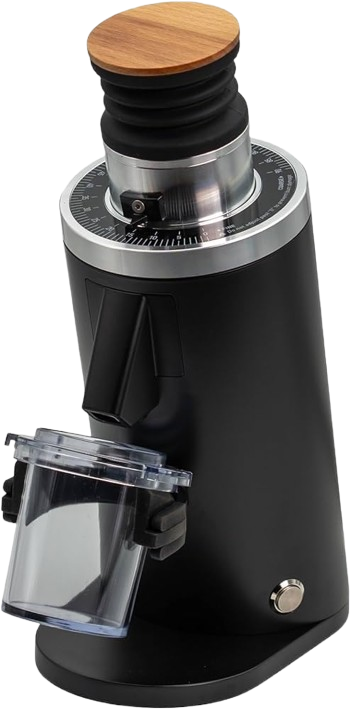
2) DF54 — Best Budget Flat-Burr Single-Dose
DF54 is the “budget single-dose that doesn’t feel like a toy” pick. The appeal is simple: flat burr espresso, stepless adjustment, and a workflow designed around grinding one dose at a time.
Why single-dose changes the experience
Single-dosing keeps beans sealed and prevents stale grounds mixing into the next shot. It also makes “try a new bag” painless. The trade-off is you do a slightly more hands-on routine (dose, grind, clear the chamber).
- Stepless dialing: tiny changes are possible, which is what espresso needs.
- Bean switching: better for people who rotate coffees and roasts.
- Flat burr feel: often preferred by people chasing clearer separation in lighter roasts.
Who it is for
You want a clean, modern single-dose routine on a budget and you’re willing to do the extra 10–20 seconds of workflow per shot.
Who should skip it
If you want pure “push button, grind dose” speed, a hopper grinder with timed dosing is usually less effort.
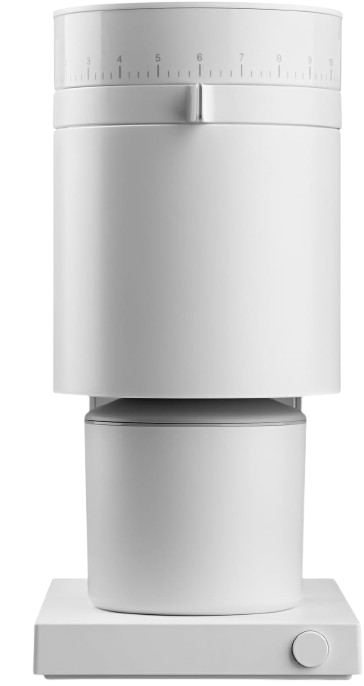
3) Fellow Opus — Best Affordable “Espresso + Brew” Electric
Opus is the pick for people who want one compact grinder that can do espresso and also handle brewed coffee without owning two grinders. It’s not the most espresso-specialized tool here, but it’s a realistic home compromise.
Where it fits best
The real win is flexibility. If your household does espresso sometimes and filter other times, one grinder that stays “good enough” across methods can be the best purchase—even if a dedicated espresso grinder would be a cleaner tool for dialing.
- Multi-method coverage: practical for mixed coffee households.
- Compact footprint: easy to live with on small counters.
- Good first upgrade path: learn espresso now; specialize later if you care.
Who it is for
You want one affordable electric grinder to cover espresso and brew, and you accept that stepless espresso-focused grinders usually feel more direct during dialing.
Who should skip it
If espresso is 90% of your coffee life and you want the smoothest dialing, go stepless (DF54 / DF64 / 064S).
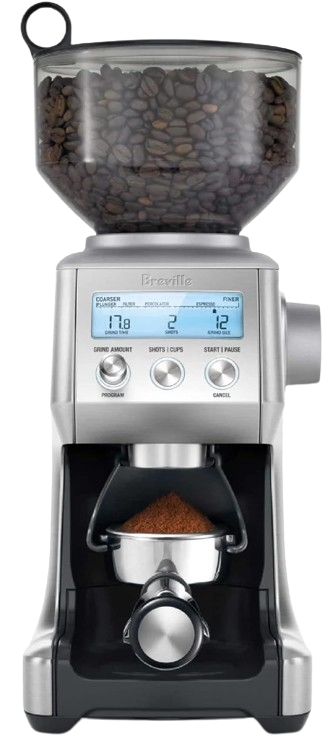
4) Breville Smart Grinder Pro — Best Mainstream Convenience
Smart Grinder Pro is the “simple home appliance” pick. It’s popular because it’s easy to use, has a broad grind range, and supports a timed dosing workflow that fits busy mornings.
Why it’s still relevant in 2026
Not everyone wants espresso to be a hobby. If you buy one bag at a time, drink it daily, and want a repeatable routine, timed dosing is a legitimate quality-of-life feature.
- Timed dosing: fast routine once you’re dialed in.
- Broad range: covers espresso through coarser brew methods.
- Portafilter-friendly workflow: fits into typical home stations.
Who it is for
You want convenience and an appliance-style interface, and you’re okay keeping beans in a hopper for speed.
Who should skip it
If you switch beans frequently or you’re chasing a clean single-dose routine, this category will feel wasteful and slow to change over.
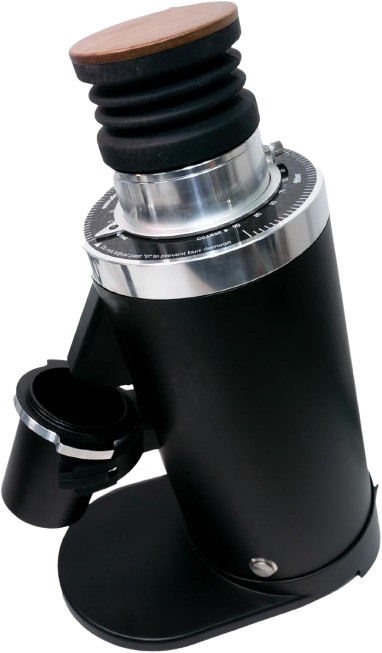
5) DF64 Gen 2 — Best Value Single-Dose Upgrade (64mm Flats)
DF64 Gen 2 is the “serious single-dose” step up: larger flat burrs, stepless control, and a design focused on reducing retention and static. It’s the grinder many people choose when they’re done wasting coffee and want dialing to feel more precise.
What changes compared to entry-level grinders
The biggest upgrade is control. Tiny adjustments become meaningful, and your dose behaves more consistently because you’re not mixing old retained grounds into a new shot. That stability is what makes espresso feel predictable.
- 64mm flat burr platform: a common “sweet spot” size for home espresso performance.
- Stepless adjustment: easy micro changes for dialing-in.
- Single-dose workflow: better freshness and faster bean switching.
Who it is for
You already understand espresso basics and want a grinder that makes dialing predictable, reduces waste, and supports a real single-dose routine.
Who should skip it
If you want the fastest possible “press a button” workflow with minimal steps, a hopper grinder still wins on speed.
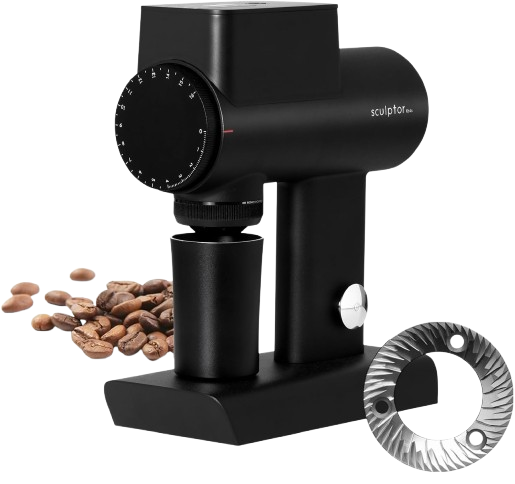
6) TIMEMORE Sculptor 064S — Best Single-Dose Versatility (Variable RPM)
064S is for people who like to tweak. Variable RPM gives you an extra lever: you can change burr speed instead of only changing grind size. That’s useful when you bounce between espresso and filter or when you want to fine-tune how a coffee extracts.
Why RPM control matters (in practice)
RPM control won’t rescue bad puck prep, but it can help you shape the routine: slower for espresso, faster for coarser brews. If you enjoy experimenting, it’s a meaningful feature—not marketing fluff.
- Variable RPM: a tuning tool for people who actually experiment.
- Stepless dialing: espresso control without “one click too far.”
- Single-dose routine: built for freshness and bean switching.
Who it is for
You want a capable single-dose grinder and you’ll use RPM control as a real knob, not a novelty.
Who should skip it
If you want a simple routine and hate extra variables, DF64 Gen 2 is the more straightforward “dial and repeat” option.
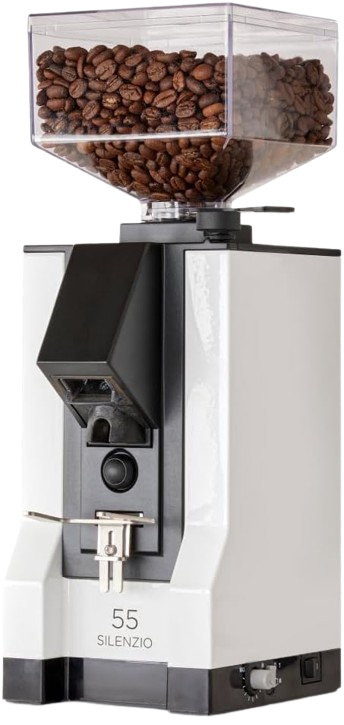
7) Eureka Mignon Silenzio 55 — Best Quiet Hopper Espresso Grinder
Silenzio 55 is the grinder you buy when noise matters. It’s built for quieter operation and a clean daily hopper workflow, with stepless adjustment and timed dosing for repeatability.
Why quiet matters more than people expect
A loud grinder is the fastest way to kill your daily espresso habit. If you share a home, have thin walls, or make coffee early, quiet operation is not luxury—it’s usability.
- Quiet-focused design: better for apartments and shared kitchens.
- Stepless adjustment: fine control for espresso dialing.
- Timed dosing: repeatable daily routine without weighing every grind.
Who it is for
You want a quiet grinder you can live with long-term, you mostly use one bag at a time, and you prefer a fast hopper routine over single-dosing.
Who should skip it
If you rotate beans constantly and want minimal purge waste, a single-dose grinder will feel more natural than any hopper design.
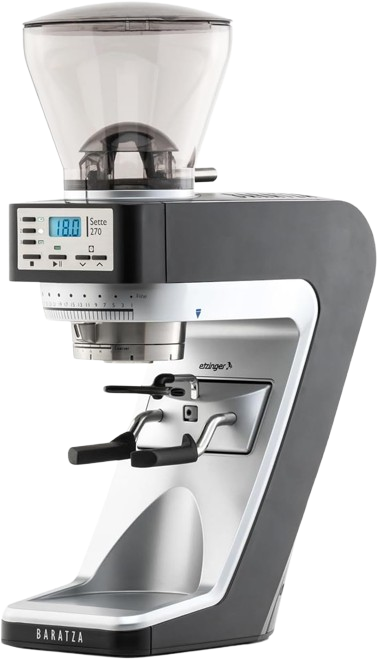
8) Baratza Sette 270 — Fastest Low-Waste Hopper Workflow
Sette 270 is the speed pick. It’s designed to grind fast, dose directly into a portafilter, and feel low-retention in daily use. If you make multiple drinks back-to-back, speed becomes a real quality-of-life feature.
Why people buy it
If your routine is “make the drinks, not the mess,” Sette’s direct-to-portafilter workflow makes sense. The adjustment system is built to give you many usable espresso steps without going fully stepless.
- Fast grinding: useful for multiple drinks and busy mornings.
- Low-waste feel: designed to reduce stale retained grounds in daily use.
- Espresso-friendly adjustment: macro/micro structure for practical dialing.
Who it is for
You value speed, you want a portafilter-first workflow, and noise is not your top concern.
Who should skip it
If you’re noise-sensitive, choose a quiet grinder like Silenzio 55—Sette is built for speed, not silence.
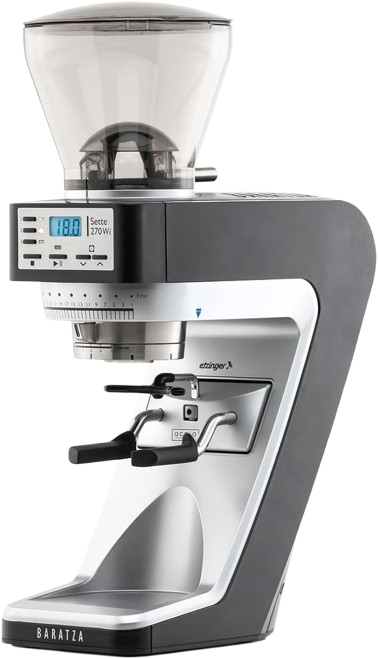
9) Baratza Sette 270Wi — Best Grind-by-Weight (GBW) Dosing
The 270Wi is for people who want repeatability with fewer steps. Grind-by-weight removes a daily source of variation: dose size. If you’re tired of “why did today’s shot run faster?” despite using the same grind, this is the upgrade path.
When GBW is actually worth paying for
If you already weigh every dose and enjoy it, GBW may feel unnecessary. But if you want to make espresso quickly with consistent dosing and minimal thinking, weight-based grinding removes a variable without changing your whole routine.
- Weight-based dosing: reduces shot-to-shot drift by controlling dose size.
- Fast routine: keeps the convenience of a hopper workflow.
- Good for shared kitchens: multiple people can get similar doses without perfect habits.
Who it is for
You want repeatability with fewer steps, you do milk drinks daily, or you share a grinder and want consistent dosing across multiple users.
Who should skip it
If budget is tight, buy a good grinder and a 0.1g scale first—you’ll get most of the benefit for less money.
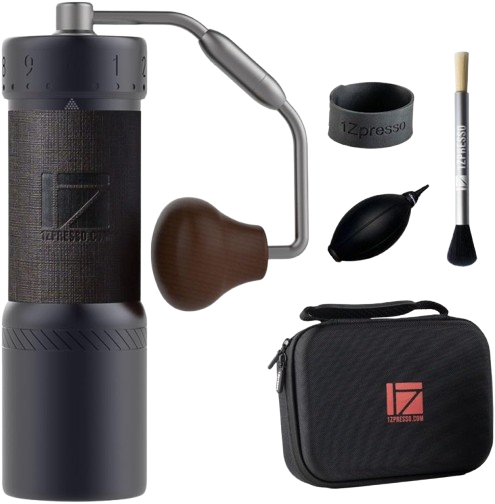
10) 1Zpresso J-Ultra — Best Hand Grinder for Espresso Precision
J-Ultra is here because hand grinding is still the best value move in espresso. You get precise dialing without paying for motors and housings. The trade-off is effort—but for one or two drinks a day, it’s realistic.
Why it’s a serious espresso tool
Espresso needs small adjustments. A hand grinder with fine click steps makes dialing feel precise, and it’s silent—which can matter more than any feature list if you live in an apartment.
- Fine click adjustment: supports espresso dialing with small changes.
- Silent workflow: ideal for early mornings and shared spaces.
- Value: money goes into burrs and alignment, not a motor.
Who it is for
You want maximum grind quality per dollar, you make 1–2 drinks daily, and you don’t mind the effort.
Who should skip it
If you make multiple drinks back-to-back every day, electric convenience will quickly feel worth paying for.
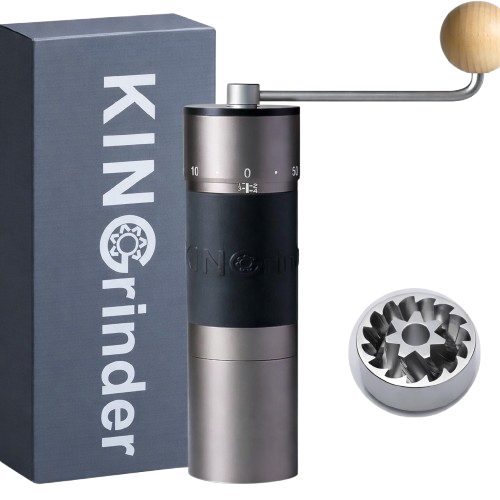
11) KINGrinder K6 — Best Value Hand Grinder for Espresso
K6 is the “spend less, still get espresso” hand grinder pick. It’s a practical way to start dialing espresso without buying an electric grinder immediately—especially if your setup is compact and you only make a couple of drinks.
Where it fits best
The K6 is not trying to be fancy. It’s trying to be useful: enough click resolution to dial espresso with sane expectations, solid grind quality for the money, and a minimal setup that stays quiet.
- Price-to-performance: a sensible on-ramp to espresso-capable grinding.
- Quiet and portable: good for travel, small kitchens, and apartments.
- Works across methods: espresso today, brewed coffee tomorrow.
Who it is for
You want a budget-friendly way to start making real espresso and you don’t mind manual grinding.
Who should skip it
If you already know you want electric convenience, start with Encore ESP (budget) or DF54 (single-dose) and skip the manual step.
What to Buy With the Grinder (Avoid the Common Trap)
Many “grinder problems” are workflow problems. A few simple tools remove variables and keep your station clean:
- 0.1 g scale: consistent dose and yield makes dialing faster and repeatable.
- Dosing funnel: reduces mess and keeps dose sizes honest.
- WDT tool: breaks clumps and improves puck consistency (especially helpful on static-prone setups).
- Brush + vacuum routine: keeps fines from changing grind behavior over time.
FAQ
Do I need a single-dose grinder for home espresso?
Only if you switch beans often or care about keeping beans sealed and fresh. If you pull the same espresso every morning, a hopper grinder with timed dosing is usually faster and easier to live with.
Is a budget grinder enough for good espresso?
Yes, if it can make small adjustments in the espresso range and stays consistent after cleaning. The trade-off is typically more retention, more static, or less convenient workflow than pricier grinders.
Is grind-by-weight better than timed dosing?
Weight-based dosing removes dose variance and can make daily espresso more repeatable. Timed dosing can be consistent once dialed in, but it’s more sensitive to bean age, humidity, and grind changes.
How often should I clean my grinder?
For daily use, brush or vacuum weekly. Do a deeper clean monthly (or sooner with oily dark roasts). A dirty grinder often feels like the coffee suddenly changed—because it did.
Bottom Line
Pick by workflow, not hype. If you want the easiest budget espresso start, Encore ESP is the sensible choice. If you want budget single-dosing, DF54 is the clean on-ramp. If you want one grinder for espresso and brew, Opus is the compromise. If you want convenience, Smart Grinder Pro keeps the routine simple. If you want a real single-dose upgrade, DF64 Gen 2 is the value play. If you like experimenting, 064S adds RPM control. If you need quiet, Silenzio 55 is the daily driver. If you want speed, Sette 270 delivers. If you want repeatability with fewer steps, Sette 270Wi is the GBW route. And if you want the most value per dollar (and don’t mind effort), J-Ultra or K6 make espresso-capable hand grinding realistic.