Best Breville Espresso Machines for Home: 5 Practical Picks
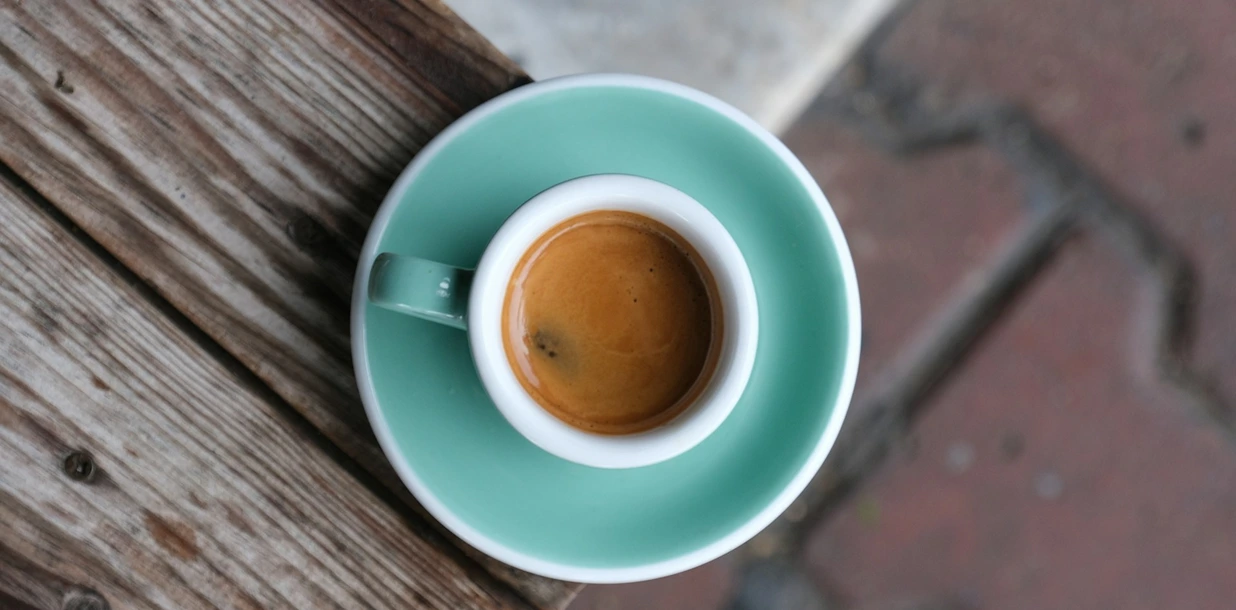
Breville machines are rarely “bad.” The real risk is buying the wrong workflow: machine-only with a separate grinder, an all-in-one that teaches you the basics, or a guided, semi-automatic setup that reduces beginner error. This shortlist is small on purpose—five models that cover the most common home routines without pretending one machine is perfect.
Quick Picks: Best Breville Espresso Machines for Home
Pick the workflow first, then the model. 54mm machines are compact and forgiving; 58mm machines are the “enthusiast platform” with broader basket and accessory options.
-
Best Compact + Easy Milk: Breville Bambino Plus (BES500)
↓ Jump to Review -
Best All-in-One Value: Breville Barista Express (BES870XL)
↓ Jump to Review -
Best Guided Consistency (Shared Kitchens): Breville Barista Touch Impress (BES881)
↓ Jump to Review -
Best Enthusiast Platform (58mm): Breville Dual Boiler (BES920XL)
↓ Jump to Review -
Best “Countertop Café” Automation: Breville Oracle Jet
↓ Jump to Review
How to Choose a Breville (Workflow First)
The fastest way to waste money is to shop by price tier and ignore what you’ll do every morning. Breville’s lineup makes more sense when you ask one question: what part of espresso do you want the machine to do for you?
- Machine-only (needs a grinder): best if you already have (or plan to buy) a capable grinder and you want a compact, reliable brewer. You control dose, grind, and puck prep.
- All-in-one: grinder built in. Convenient, beginner-friendly, and a good “learn the basics” path—but the grinder is the ceiling. If you later want a serious grinder upgrade, you’ll be working around the built-in one.
- Guided / assisted: the machine tries to reduce the common failure points: inconsistent dosing, uneven tamping, milk texture variability, and “too many settings” overload.
- Automation: you’re paying to remove steps and reduce variability across multiple users. Great when coffee is daily and the kitchen is busy—overkill if you enjoy the craft.
54mm vs 58mm in Breville: What Actually Changes
Breville uses two main ecosystems. Most compact and all-in-one models use 54mm portafilters; the “platform” machines move to 58mm. Neither is automatically better, but the choice changes your accessory path and how forgiving the machine feels.
- 54mm (Bambino Plus, Barista Express, Touch Impress): smaller dose baskets, typically more forgiving on puck prep. Accessory selection is still good, but more specific to Breville/Sage geometry.
- 58mm (Dual Boiler, Oracle Jet): wider compatibility with precision baskets and bottomless portafilters, and more “standard” café-style tooling. This is the better path if you plan to chase repeatability, upgrade grinders, and tweak baskets over time.
- Practical rule: if you want simple lattes with low friction, 54mm is fine. If you want to build an enthusiast setup, 58mm makes upgrades easier.
What to Budget For Besides the Machine
Most “espresso machine regret” is actually accessory regret. You buy a machine, then realize the missing pieces are what make espresso repeatable. You don’t need a full barista kit, but you do need the basics.
- Grinder (if machine-only): the single biggest quality lever. A great machine with a weak grinder is a dead end.
- Scale: weighing dose and yield turns espresso from guessing into a repeatable recipe.
- Fresh coffee: if beans are stale, no machine fixes it. Buy smaller amounts more often.
- Milk pitcher (for lattes): a proper pitcher makes steaming easier and more consistent.
- Water discipline: hard water causes scale and performance drift. Use suitable water or filtration for your area.
If you’re trying to keep the setup minimal, prioritize this order: fresh beans → grinder → scale. Everything else is optional until you know you care.
Now the picks—kept intentionally short. If your routine matches the “who it’s for” section, you’ll be happy. If it doesn’t, the machine will feel like a compromise no review can fix.
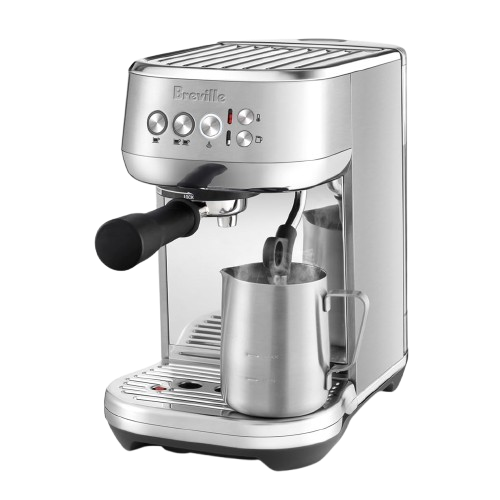
1) Breville Bambino Plus (BES500) — Best Compact + Easy Milk
Bambino Plus is the simplest way into “real espresso” without sacrificing daily convenience. It’s small, heats quickly, and keeps the workflow light—especially for milk drinks. The key is to treat it as a great brewer paired with a grinder, not as a full system by itself.
Why it wins
- Fast daily start: ideal when you don’t want a 15–30 minute warm-up routine.
- Milk drinks are easier: auto-frothing options reduce the “my milk is always bubbly” beginner problem.
- Small footprint: fits real kitchens where counter space matters.
- Pairs well with grinder upgrades: you can improve shots over time without replacing the machine.
Trade-offs to know
- No grinder: your results depend heavily on what you pair with it. Pre-ground coffee is a short-term workaround, not the plan.
- 54mm ecosystem: accessories are available, but you’re not in the universal 58mm world.
- Lightweight, compact feel: it’s designed to be small, not “tank-like.” That’s normal at this size and price.
Who it’s for
You want cappuccinos and lattes at home with minimal friction, you have limited counter space, and you’re willing to use (or buy) a capable grinder. This is also the best pick when you want a clean, modern setup: small machine + good grinder + scale.
Who should skip it
You want an all-in-one box with a built-in grinder, or you’re specifically building a 58mm accessory stack (precision baskets, multiple portafilters, café tooling) from day one.
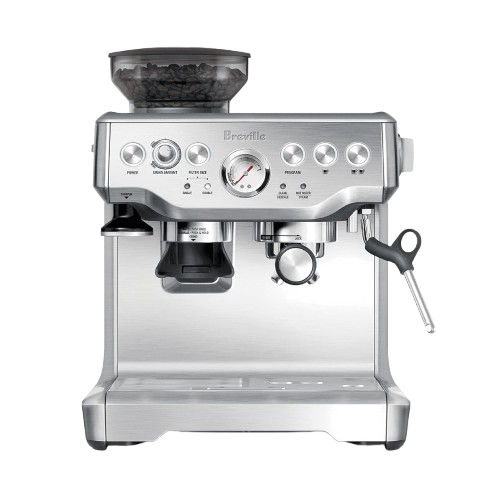
2) Breville Barista Express (BES870XL) — Best All-in-One Value
Barista Express is popular for a reason: it’s an honest all-in-one that teaches you the fundamentals without forcing you to buy a separate grinder immediately. If you want to learn espresso and you enjoy hands-on control, Express is usually the most sensible starting point in Breville’s lineup.
Why it wins
- Built-in grinder convenience: fewer boxes, fewer cables, simpler shopping.
- Great learning platform: you control grind, dose, tamp, and milk—so you actually understand why shots change.
- Strong value: for many homes, this is “good enough” for years.
Trade-offs to know
- The grinder is the limitation: it’s usable, but it’s rarely the end-game if you become picky about clarity and consistency.
- More variables = more mistakes: compared to assisted models, Express rewards good puck prep and punishes rushed mornings.
- 54mm ecosystem: accessory path is Breville-specific.
Who it’s for
You want an all-in-one that can do espresso and milk drinks, and you’re okay with a learning curve. You like the idea of improving your technique over time. You also want a machine that still “works” even if you haven’t built an entire coffee tool drawer yet.
Who should skip it
You want push-button consistency, you hate dialing in, or your household has multiple users who will not share the same level of patience. In those cases, assisted workflow wins.
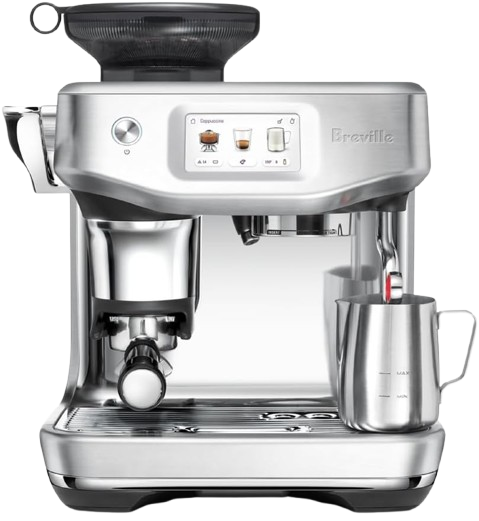
3) Breville Barista Touch Impress (BES881) — Best Guided Consistency
Touch Impress is the “shared kitchen” answer. It keeps the all-in-one convenience, but adds guidance and assisted puck prep so the result is less dependent on whether someone tamped well or guessed the dose. If your goal is repeatable coffee with less tinkering, this is where Breville starts making real sense.
Why it wins
- Less beginner error: assisted dosing/tamping helps prevent the two classics: under-filled baskets and uneven tamp pressure.
- Faster morning workflow: fewer manual steps, less mess, less “why is it channeling?”
- Approachable interface: touchscreen guidance is more realistic for households than a “learn espresso like a barista” expectation.
- Milk support: guided milk textures help people who mainly drink lattes and cappuccinos.
Trade-offs to know
- You’re buying convenience: if you love manual espresso craft, this can feel like it removes the fun parts.
- Still an all-in-one grinder: you gain workflow simplicity, but you don’t escape the built-in grinder ceiling.
- More systems, more cleaning: assisted workflows are great, but you must keep the grinding/tamping area and milk system clean to stay consistent.
Who it’s for
You want consistent drinks with minimal fuss, multiple people use the machine, or you know you will not enjoy spending weeks learning dial-in. Touch Impress is also a strong “gift machine” because it reduces the skill requirement.
Who should skip it
You’re building a long-term enthusiast setup with a separate grinder and 58mm accessories, or you specifically want the deepest manual control for shot profiling and milk technique.
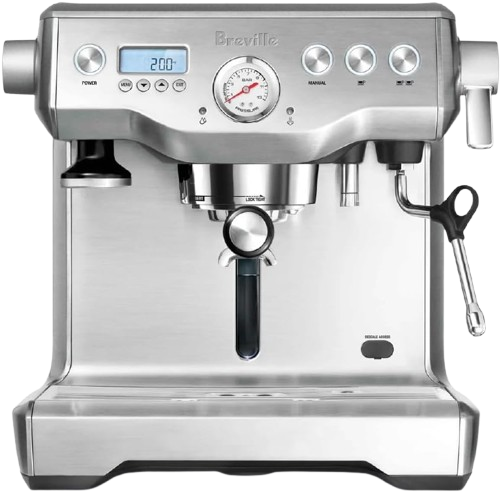
4) Breville Dual Boiler (BES920XL) — Best Enthusiast Platform (58mm)
Dual Boiler is the “serious home barista” Breville. The point isn’t that it makes a magical espresso by itself—the point is stability and control. You can pull shots and steam milk without waiting, and you’re in the 58mm world where baskets, portafilters, and tools are easier to source and upgrade.
Why it wins
- Real workflow speed: brew and steam without waiting—important if you make milk drinks daily.
- Stability for dialing in: temperature and steam performance are built for repeatability.
- 58mm ecosystem: easier path into precision baskets, bottomless portafilters, and café-style tools.
- Pairs with great grinders: this machine rewards upgrades—better grinder, better coffee.
Trade-offs to know
- Needs a grinder: Dual Boiler is not a complete system; it’s the machine part of a serious setup.
- Bigger footprint: it’s a countertop commitment, not a “tuck it in the corner” machine.
- You must care about maintenance: any higher-performance system rewards basic routine cleaning and water-quality discipline.
Who it’s for
You enjoy the craft, you want café-style control at home, and you’re ready to treat the grinder as equally important as the machine. If you plan to upgrade accessories over time and keep the machine for many years, Dual Boiler is the most rational long-term Breville pick.
Who should skip it
You want an all-in-one, you dislike weighing doses and managing variables, or your priority is effortless morning coffee rather than the highest ceiling.
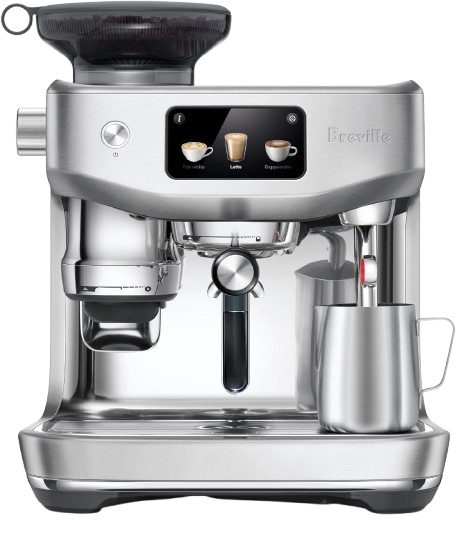
5) Breville Oracle Jet — Best “Countertop Café” Automation
Oracle Jet is for people who want the speed and consistency of a guided system, but with a more premium, café-leaning feel. It aims to automate the annoying parts—grinding, dosing, tamping—and make milk drinks repeatable with less practice. If espresso is a daily habit and multiple people use the machine, automation can be a rational purchase, not a luxury.
Why it wins
- Low-friction daily coffee: fewer steps between “I want a latte” and a good result.
- Consistency across users: the machine compensates for differences in technique.
- 58mm path: more standard café-style tooling and baskets compared to 54mm models.
- Good fit for milk-heavy routines: if most drinks are cappuccinos and lattes, automation pays back fast.
Trade-offs to know
- Price and complexity: you’re paying for systems, and systems require cleaning.
- Less craft, more appliance: if you love manual control, this may feel too “hands-off.”
- Not immune to bad beans: automation doesn’t fix stale coffee, poor water, or wrong grind range.
Who it’s for
You want café-style milk drinks at home with minimal skill requirement, you value speed, and you’re realistic about maintenance. It’s also a strong pick when you’re buying “one machine for the household” and you want it to work for everyone.
Who should skip it
You’re budget-sensitive, you enjoy manual workflow, or you’re perfectly happy with an all-in-one like Barista Express and a little practice.
FAQ
Do I need a grinder with Bambino Plus?
Yes, if you want consistent espresso. Bambino Plus is the brewer; the grinder is what makes the shot dial-in possible. Pre-ground can work for pressurized baskets, but it caps quality and makes espresso “fine today, random tomorrow.” If you want Bambino Plus to shine, prioritize a capable espresso-focused grinder and a small scale.
Is 54mm a problem?
Not for most people. 54mm Breville machines can make excellent espresso and milk drinks. The difference is mainly ecosystem: 58mm has broader “standard” compatibility and is the easier path for precision basket upgrades. If you’re not planning a tool-and-accessory hobby, 54mm is completely fine.
Barista Express vs Touch Impress: which should I buy?
Choose Barista Express if you want to learn and control the process (and you’re okay making a few bad shots while you learn). Choose Touch Impress if you want repeatability with less practice, or multiple people use the machine and you want “good coffee” to be the default outcome.
Dual Boiler vs Oracle Jet: what’s the real difference?
Dual Boiler is about control and ceiling: pair it with a great grinder and it rewards skill and upgrades. Oracle Jet is about automation and consistency: it tries to reduce manual steps so more users get a good result with less effort. If you enjoy the craft, pick Dual Boiler. If you want an appliance-like daily latte machine for the household, Oracle Jet is the more practical choice.
Bottom Line
The “best Breville” is the one that matches your routine. For compact kitchens and easy milk drinks, start with Bambino Plus. For the best all-in-one value and a real learning platform, choose Barista Express. If you want guided consistency for multiple users, Touch Impress is the safer bet. If you’re building a long-term enthusiast setup, Dual Boiler is the 58mm platform. And if you want fast, repeatable results with minimal manual steps, Oracle Jet is the “countertop café” option.