Best Espresso Machines of 2026: 5 Proven Picks for Real Espresso at Home
This shortlist is built around one idea: the “best” espresso machine is the one that matches your daily workflow. Below are five proven routes — from compact fast-start espresso to a prosumer dual-boiler setup — with clear trade-offs and no filler.
Quick Picks: Best Espresso Machines (2026)
Pick the workflow first. Then buy the machine that supports it.
-
Best Skill-Building Semi-Auto (58mm): Gaggia Classic E24 / Classic-style platform (RI9380/49)
↓ Jump to Review -
Best Small-Kitchen Espresso + Milk: Breville Bambino (BES450)
↓ Jump to Review -
Best All-in-One for Beginners: Breville Barista Express Impress (BES876)
↓ Jump to Review -
Best Prosumer Espresso + Milk Power: Rancilio Silvia Pro X (dual boiler)
↓ Jump to Review -
Best Premium Guided/Automatic Setup: Breville Oracle Jet (BES985)
↓ Jump to Review
Choose the Right Machine in 2 Minutes
Ignore “bars” and marketing buzz. Home espresso comes down to workflow friction: how many steps you’ll tolerate every morning, and how consistent you need results to be.
- If you want transferable barista skills: choose a classic 58mm platform (Gaggia).
- If you want weekday speed: choose a compact fast-start machine (Bambino).
- If you don’t own a grinder: an all-in-one is the simplest “single purchase” lane (Express Impress).
- If you make milk drinks often: steam power and brew/steam workflow matter more than specs (Silvia Pro X).
- If you want café-style results with less manual work: choose guided automation (Oracle Jet).
One hard truth: espresso quality is constrained by the grinder. Machines can stabilize temperature and pressure behavior, but they can’t fix inconsistent grind size. If your budget is tight, it’s usually smarter to buy a solid machine and protect budget for an espresso-capable grinder.
The 5 Best Espresso Machines of 2026 (Real-World Reviews)
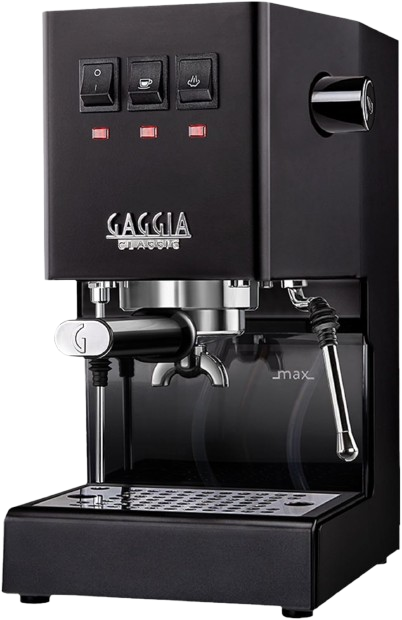
1) Gaggia Classic Evo Pro (RI9380/49) — Best for Learning Real Espresso
If you want espresso skills that actually transfer to higher-end machines, a classic 58 mm setup is the cleanest starting point. The Gaggia Classic-style platform is simple on purpose: you control grind, dose, and puck prep, and the machine doesn’t try to hide mistakes. When you improve, your shots improve.
Why it’s worth buying
- 58 mm standard: wide compatibility with baskets, tampers, and tools.
- Classic semi-auto feel: teaches dialing-in instead of covering mistakes.
- Service-friendly platform: this family of machines has a long maintenance/mod culture.
- Clean puck release: a 3-way solenoid design helps reduce messy, soupy pucks.
Trade-offs you should accept
- Not fast by default: you’ll typically warm up, flush, then brew.
- Brew → steam workflow: classic machines reward patience when making milk drinks.
- No grinder included: the “real espresso” path assumes an espresso-capable grinder.
Who it’s for
You want espresso as a skill: consistent dosing, controlled extraction, and learning proper milk texture. This is the pick for people who enjoy improving — and want their setup to improve with them.
Who should skip it
If you refuse to weigh doses, adjust grind, or spend a few minutes on routine, you’ll be happier with a guided/automated machine.
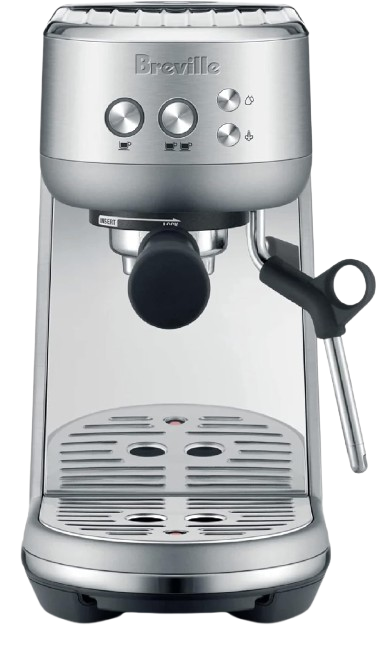
2) Breville Bambino (BES450) — Best Compact Espresso + Milk in a Small Kitchen
The Bambino is the “espresso happens on weekdays” machine. It’s built for fast start-up and low friction: small footprint, quick workflow, and a steam wand that can produce real microfoam when your technique is solid. If counter space is tight, this is one of the easiest machines to live with.
Why it’s worth buying
- Fast routine: designed for quick warm-up and weekday use.
- Real milk drinks: a manual wand means cappuccinos and lattes are practical.
- Small footprint: works in tight kitchens where larger all-in-ones feel bulky.
- Good “engine” approach: upgrade your grinder over time without replacing the machine.
Trade-offs you should accept
- Grinder-dependent: weak grinders create unstable flow and inconsistent shots.
- Less upgrade-oriented than 58 mm: accessory ecosystem is strong, but 58 mm is the broad standard.
- Lightweight build feel: you’re buying compact convenience, not prosumer heft.
Who it’s for
You want legit espresso and milk drinks from a compact machine, and you’re willing to pair it with an espresso-capable grinder (now or soon).
Who should skip it
If you want a single box that includes grinding, dosing help, and a “full station” experience, the Express Impress is the better match.
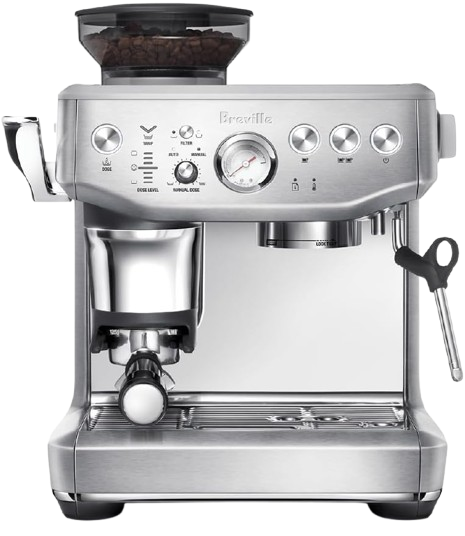
3) Breville Barista Express Impress (BES876) — Best All-in-One for Beginners
Most home espresso failures happen before the water ever touches the coffee: inconsistent dosing and messy tamping. The Express Impress exists to reduce those beginner errors while still keeping the semi-automatic experience. You get an integrated grinder and assisted puck prep, so your first week is about learning taste — not fighting chaos.
Why it’s worth buying
- Assisted tamping: consistent tamp pressure and a “finished puck” feel reduce bad shots early.
- Integrated grinder: one purchase, one station, fewer reasons to quit.
- Faster consistency in shared kitchens: fewer variables for different users.
- Still a real semi-auto: you can learn timing, ratios, and milk texture.
Trade-offs you should accept
- Built-in grinder ceiling: convenient, but enthusiasts often outgrow integrated grinding.
- Bigger footprint: it’s a full station, not a compact appliance.
- More parts to clean: grinder + machine means more routine maintenance.
Who it’s for
You want “one box espresso” that produces solid results quickly, without buying a separate grinder immediately. Ideal when multiple people use the machine and you want repeatability.
Who should skip it
If you already own a strong espresso grinder, you’ll often get better long-term value from a machine-only pick (Bambino) or a 58 mm platform (Gaggia).
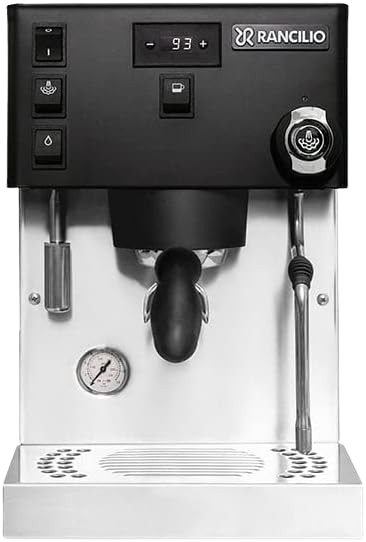
4) Rancilio Silvia Pro X — Best Prosumer Upgrade Without Going Full Commercial
When espresso becomes a daily routine — especially with milk drinks — the limitation of many entry machines is workflow: brew, wait, then steam. The Silvia Pro X is built to feel like a “real café station” on a countertop, with a prosumer layout focused on temperature stability and strong steaming.
Why it’s worth buying
- Prosumer workflow: built for people who make espresso and steam regularly.
- Temperature stability: dual boiler + PID-style control is designed to keep brew and steam consistent.
- Milk performance: stronger steam makes textured milk easier and faster.
- Long-term durability mindset: fewer “appliance” compromises in daily use.
Trade-offs you should accept
- Cost and size: this is a commitment, not an entry experiment.
- Warm-up is real: prosumer machines reward planning, not 60-second routines.
- Requires a good grinder: this tier exposes grind inconsistency immediately.
Who it’s for
You make espresso often, you care about stable results, and milk drinks are a real part of your routine. This is the practical “next level” for serious home baristas.
Who should skip it
If your routine is one drink a day and you value speed over ritual, you’ll likely be happier with Bambino or a guided Breville.
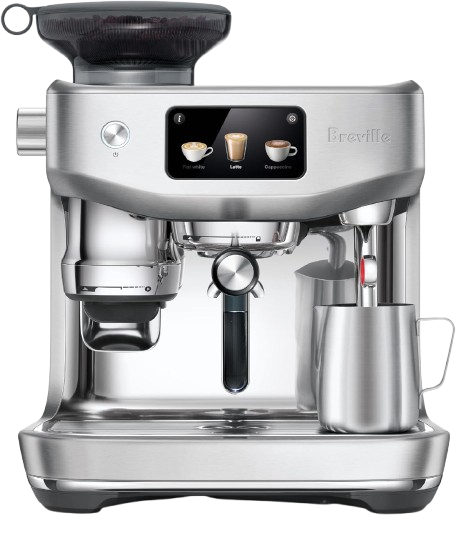
5) Breville Oracle Jet (BES985) — Best Premium Guided/Automatic Espresso Station
The Oracle Jet is the “I want café results, but I don’t want to babysit every variable” machine. It’s still portafilter espresso — not a capsule system — but it automates the most error-prone steps and guides you through extraction and milk. In other words: it’s built for repeatability at high volume in real kitchens.
Why it’s worth buying
- Grind/dose/tamp automation: reduces the biggest beginner failure points.
- 58 mm portafilter workflow: closer to “pro-style” routine than most guided machines.
- Hands-free milk options: useful when you make multiple drinks back-to-back.
- Guidance for consistency: designed to help you land on repeatable results faster.
Trade-offs you should accept
- Expensive and complex: you’re buying convenience and systems, not just “better espresso.”
- More cleaning routines: automation is great — until you skip maintenance.
- Not for minimalists: if you prefer simple knobs and fewer components, this may feel like overkill.
Who it’s for
You want repeatable café-style drinks at home with less manual work, especially if multiple people use the machine or you make milk drinks frequently.
Who should skip it
If you enjoy hands-on espresso as a craft, you’ll often get more satisfaction (and similar cup potential) from a simpler 58 mm setup plus a strong grinder.
What to Buy With Your Espresso Machine (Minimal, High-Impact)
- A scale: weighing dose and yield is the fastest path to repeatable shots.
- A proper tamper: match your basket size (54 mm or 58 mm) for consistent puck prep.
- A milk pitcher (if you drink milk drinks): the right shape makes texture easier.
- Cleaning basics: a brush, microfiber cloth, and routine backflushing where applicable.
- Water plan: scale destroys machines slowly — filtered water is cheaper than repairs.
Common Mistakes That Kill Home Espresso
- Buying the machine before the grinder: inconsistent grind creates “random” espresso.
- Chasing specs: pressure numbers don’t tell you if your workflow will be enjoyable.
- Changing five variables at once: adjust one thing per shot (grind first, then ratio).
- Neglecting maintenance: coffee oils and scale don’t just affect taste — they affect reliability.
- Expecting espresso to taste good with supermarket pre-ground: it usually won’t.
FAQ
Do I need a grinder on day one?
If you’re using a semi-auto machine, yes — unless your machine includes one. Espresso is sensitive to grind size. Without an espresso-capable grinder, your “dial-in” becomes guesswork and the results feel random.
Is 58 mm better than 54 mm?
58 mm is the broad ecosystem standard: more basket and accessory compatibility, and your technique transfers easily to other machines. 54 mm can still produce excellent espresso; it’s just a different tool ecosystem.
What’s the practical difference between entry machines and prosumer machines?
It’s mostly workflow and stability. Prosumer machines are built to hold temperature steady and handle milk drinks without slowing you down. Entry machines can taste great too — but you accept more compromises in speed, steam power, and “shot-to-shot” consistency.
I mostly drink lattes. Should I prioritize steam power?
Yes. If milk drinks are your default, steam strength and control matter daily. Strong steam makes good texture easier, faster, and more repeatable — especially for multiple drinks.
How do I avoid sour or bitter shots quickly?
Adjust grind first. Sour usually means under-extraction (often too coarse or too fast). Bitter can be over-extraction (often too fine or too slow). Keep everything else the same and change one variable at a time.
Which pick is the safest “no regrets” choice?
If you already have a good grinder and want compact convenience, Bambino is the safest daily driver. If you don’t have a grinder and want one purchase, Express Impress is the safest lane. If you want to grow skills and stay in the 58 mm ecosystem, start with Gaggia.
Bottom Line
Don’t buy “the best espresso machine.” Buy the best workflow for your life. Gaggia is the learning platform, Bambino is the compact weekday engine, Express Impress is the beginner all-in-one, Silvia Pro X is the serious prosumer step, and Oracle Jet is premium repeatability with guided automation.