Best Espresso Machines Under $500 (2026): 7 Smart Picks for Real Espresso at Home
Under $500 is the sweet spot where you can get a genuinely capable espresso machine — but only if you buy for your routine. This shortlist is organized around real home trade-offs: milk speed vs. upgrade potential, compact size vs. 58mm accessories, and “learn espresso” vs. “press a button and move on.”
Quick Picks: Best Espresso Machines Under $500
Pick the workflow first. Then pick the machine. If you want espresso to be a daily habit (not a weekend project), the right “style” matters more than small spec differences.
-
Best for Milk Drinks (Fast, Low Effort): Breville Bambino Plus (BES500)
↓ Jump to Review -
Best 58mm Upgrade Platform (Espresso Hobby Path): Gaggia Classic (RI9380/46)
↓ Jump to Review -
Best Compact Value (Manual Steam): Breville Bambino (BES450)
↓ Jump to Review -
Best for Small Kitchens (Slim Machine): De’Longhi Dedica Arte (EC885M)
↓ Jump to Review -
Best “Brew + Steam” Convenience in 58mm Format: Calphalon Temp iQ (BVCLECMP1)
↓ Jump to Review -
Best One-Touch Fresh Bean Convenience: Philips 1200 Series (EP1220/04)
↓ Jump to Review -
Best Pods for Maximum Speed: Nespresso Essenza Mini (Original)
↓ Jump to Review
How to Choose an Espresso Machine Under $500
Most “budget espresso” disappointment comes from buying a machine that fights your routine. The fix is simple: decide which part of espresso you want to do manually.
1) Do you want espresso as a craft — or as a convenience?
If you enjoy dialing in and improving shots, a semi-auto machine makes sense. If you just want caffeine with a café-like feel and minimal learning, a bean-to-cup or pod machine will make you happier — even if the absolute peak flavor potential is lower.
2) Milk drinks change everything
Lattes and cappuccinos require steam power and technique. In this price range, machines either help you with milk (automatic frothing) or they expect you to learn (manual steaming). If milk is 70% of your drinks, prioritize the milk workflow first — it’s the most common reason people stop using a machine.
3) Grinder reality check
None of the machines below include a serious grinder. For true espresso with non-pressurized baskets, a capable grinder is the difference between “this is great” and “why is this inconsistent?” If you’re starting with pre-ground coffee, choose a machine that supports pressurized baskets and treat it as a learning step, not a final setup.
The 7 Best Espresso Machines Under $500
These picks cover the main home workflows: fast semi-auto espresso, an upgrade-friendly 58mm platform, compact machines for small kitchens, and the convenience options (bean-to-cup and pods). There’s no “perfect” pick — only the best match for how you’ll actually use it.
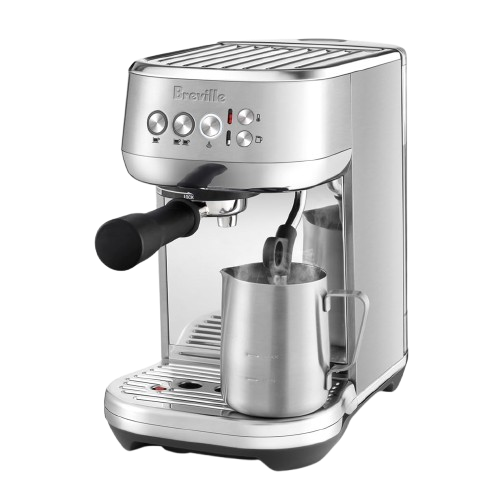
1) Breville Bambino Plus (BES500) — Best for Milk Drinks Under $500
Bambino Plus is the best choice when you want espresso that feels modern and easy: fast warm-up, consistent shot routine, and milk frothing that reduces beginner error. It’s a machine for people who will actually make cappuccinos on a weekday, not just talk about doing it.
Why it’s on the shortlist
- Milk-first workflow: automatic frothing helps you get silky texture without mastering technique on day one.
- Fast daily routine: you’re not waiting around for long preheats, so you use the machine more often.
- Beginner-friendly consistency: fewer variables to ruin a drink when you’re learning dose, distribution, and tamp.
- Small footprint: fits apartments and tight counters without looking like lab equipment.
What to know before you buy
This is a “machine-only” play: you still need coffee ground correctly for espresso to get the best results. If your grinder can’t make small, repeatable adjustments, you’ll see channeling and inconsistent flow. Bambino Plus can produce great drinks, but it won’t compensate for a weak grind.
Who it is for
Milk drinks are your default (latte, cappuccino, flat white), you want speed on busy mornings, and you’d rather spend your learning energy on espresso basics than on steaming technique.
Who should skip it
You want a full 58mm ecosystem, you’re planning heavy modification/upgrade projects, or you strongly prefer a traditional single-boiler feel and manual control over everything.
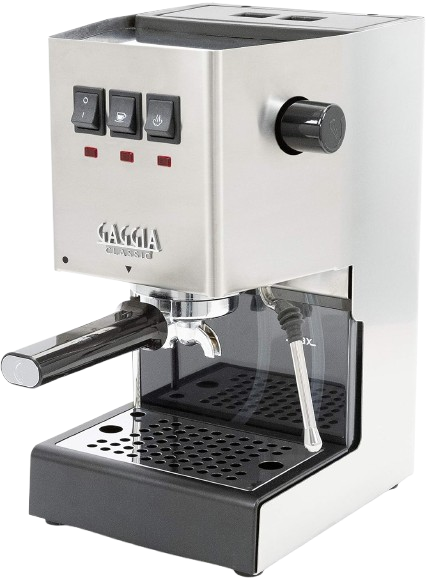
2) Gaggia Classic (RI9380/46) — Best 58mm Upgrade Platform
The Gaggia Classic is the “serious espresso” option in this price bracket. It’s not the easiest machine, but it’s the one that makes sense if you want to build a long-term setup with standard 58mm accessories and a classic café-style workflow.
Why it’s on the shortlist
- 58mm standard: easy accessory compatibility (tampers, precision baskets, bottomless portafilters).
- “Real espresso” feel: built for puck prep and repeatable technique, not for shortcuts.
- Long-term platform: you can improve the setup over time instead of replacing the machine.
What to know before you buy
This is not a “press button, get latte” machine. It rewards learning (and a capable grinder). It also expects patience: traditional machines like this benefit from proper warm-up and a routine that stays consistent. Milk drinks are absolutely doable, but you’re managing the brew/steam transition like a classic home barista.
Who it is for
You want a 58mm home setup with a real upgrade path. You’re willing to learn dialing in, puck prep, and steaming, and you’d rather own one solid platform than replace a smaller machine later.
Who should skip it
You need fast, automated milk drinks with minimal effort, or you know you won’t enjoy the learning curve. If convenience is the main goal, Bambino Plus or a super-automatic will fit your life better.
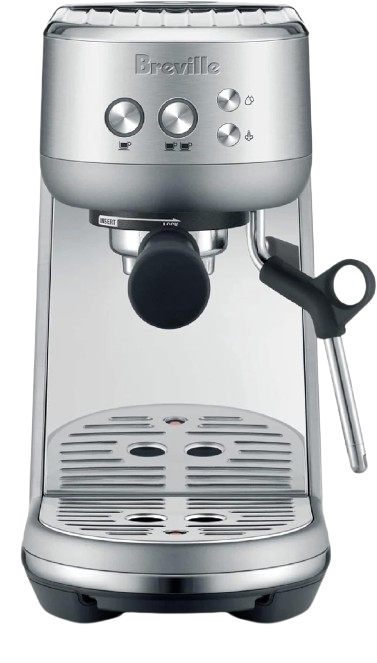
3) Breville Bambino (BES450) — Best Compact Value
The standard Bambino is the value version of the Bambino Plus concept: fast, compact, and capable — but with manual steaming. If you mostly drink straight espresso or you’re happy to learn steaming, this is one of the best ways to get into real espresso without paying for extra automation.
Why it’s on the shortlist
- Great espresso fundamentals: strong results for the money when paired with an espresso-capable grinder.
- Fast warm-up: makes “one shot before work” realistic.
- Compact footprint: easy to live with on a normal counter.
- Manual steaming: gives you full control once you learn the basics.
What to know before you buy
Manual steaming is the trade-off. That’s not a deal-breaker — it’s a skill. If you want latte art, this is a good machine to learn on. If you want milk drinks with minimal thinking, the Bambino Plus is the safer pick.
Who it is for
You want a compact, modern espresso machine and you’d rather put budget toward a grinder (or beans) than toward milk automation.
Who should skip it
You drink mostly cappuccinos and you know you won’t practice steaming. In that case, you’ll be happier with Bambino Plus or a one-touch machine.
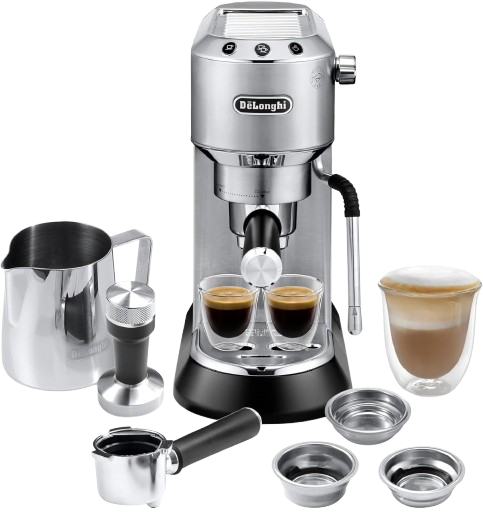
4) De’Longhi Dedica Arte (EC885M) — Best Slim Machine for Small Kitchens
Dedica Arte exists for one reason: it fits where other machines don’t. It’s one of the slimmest options that still gives you a real steam wand and a solid home cappuccino routine. If your counter is tiny, this is often the most realistic choice.
Why it’s on the shortlist
- Ultra-slim design: ideal for small kitchens, dorm-style counters, or shared spaces.
- Beginner-friendly baskets: pressurized options can work well with pre-ground coffee.
- Manual steam wand: lets you learn milk texture for lattes and cappuccinos.
What to know before you buy
Dedica’s biggest compromise is the ecosystem: it uses a smaller portafilter size than 54mm/58mm setups. That’s not “bad” — it’s just different. If you want the broadest accessory compatibility and the most upgrade headroom, the 58mm Gaggia path is stronger. If you want a machine that fits and makes tasty milk drinks without dominating your counter, Dedica Arte is doing its job.
Who it is for
You have limited counter space, you want espresso-style drinks with real milk texture, and you prefer a simple machine that doesn’t demand a big barista workstation.
Who should skip it
You’re planning precision baskets, heavy accessory upgrades, and long-term espresso tinkering. For that, choose a 58mm platform instead.
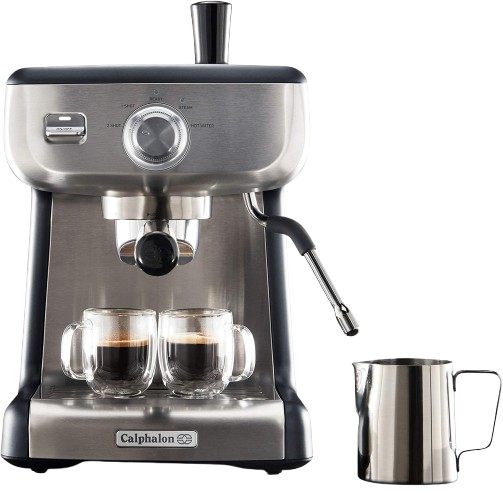
5) Calphalon Temp iQ (BVCLECMP1) — Best 58mm Convenience Pick
Calphalon Temp iQ is a practical “café-style” format machine for people who want 58mm accessories and a straightforward routine without stepping into the full hobby path. It’s a good middle ground when you want the look and feel of a larger setup but you still care about daily convenience.
Why it’s on the shortlist
- 58mm portafilter: a familiar café-style workflow and broad accessory options.
- Balanced home routine: designed for “make a drink, clean up, move on.”
- Milk drinks capable: good option if cappuccinos are part of the plan.
What to know before you buy
With many budget machines in this category, the included baskets tend to be more beginner-friendly than “competition” focused. That’s not a problem if you’re starting with pre-ground coffee or learning espresso basics. If you already have a strong grinder and you want to chase the last 10% of shot quality, the Gaggia platform is typically the better long-term path.
Who it is for
You want 58mm accessories and café-style ergonomics, you’ll make milk drinks regularly, and you want a machine that feels more substantial than the tiniest compact options.
Who should skip it
You want the simplest possible experience (choose Philips or Nespresso), or you want the most upgrade headroom and long-term mod potential (choose Gaggia).
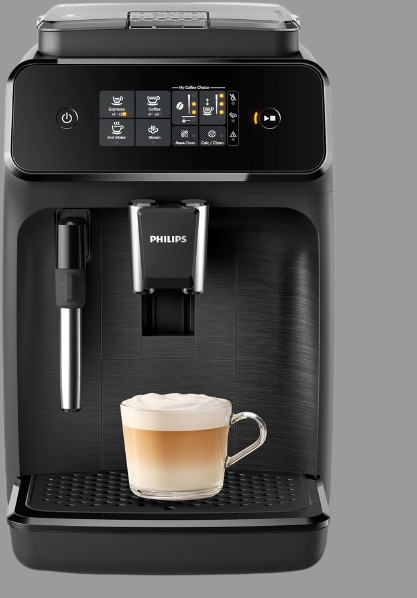
6) Philips 1200 Series (EP1220/04) — Best Fresh-Bean Convenience
If you like the idea of espresso but not the idea of learning espresso, a super-automatic is the honest answer. The Philips 1200 is a simple bean-to-cup machine: put in beans and water, press a button, and get a consistent result with minimal effort.
Why it’s on the shortlist
- Fresh beans, no learning curve: built-in grinder and automatic dosing do the heavy lifting.
- Consistency for busy homes: everyone can make the same drink without mastering technique.
- Low daily friction: fewer steps means you actually use it.
What to know before you buy
This is not a “barista espresso” machine. You trade maximum control and the ability to dial in like a café for speed and consistency. For many people, that trade is worth it — especially if the alternative is buying a semi-auto and never using it.
Who it is for
You want fresh-bean coffee with espresso-style drinks at the push of a button, and you don’t want puck prep, weighing, or dialing in to become a hobby.
Who should skip it
You care about manual control, you want to learn espresso technique, or you want to steam milk like a traditional barista with a true wand workflow.
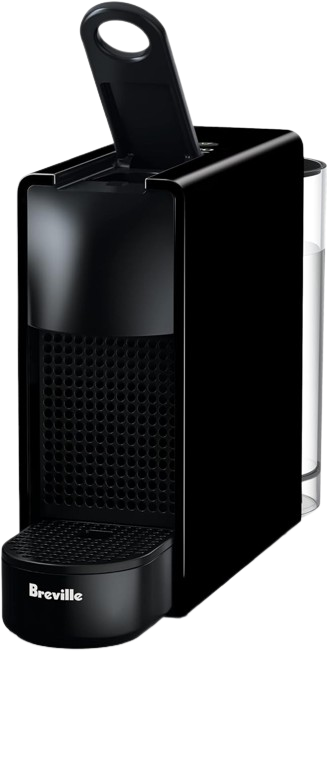
7) Nespresso Essenza Mini — Best Pods Pick Under $500
Pods aren’t “traditional espresso,” but they are the fastest path to a small espresso-style drink with very predictable results. If your goal is speed, tiny footprint, and consistency, Essenza Mini is the simplest machine on this list.
Why it’s on the shortlist
- Fastest workflow: heat, brew, and rinse are simple and repeatable.
- Smallest footprint: ideal for offices, dorms, and minimal counters.
- Low mess: no dosing tools, no spent puck cleanup.
What to know before you buy
Pods lock you into a pod ecosystem and a higher cost per drink compared to whole beans. If you want lattes, you’ll typically add a separate milk frother. If you want the flexibility to experiment with beans and grind, a semi-auto machine is the better long-term choice.
Who it is for
You want a consistent espresso-style drink with minimal time and minimal cleanup, and you’re comfortable paying for pod convenience.
Who should skip it
You want to learn espresso, adjust flavor by grind and dose, or you want milk drinks driven by a traditional steam wand.
Budget Setup Checklist (What Actually Improves Your Results)
Under $500, small upgrades change your experience more than chasing a different machine. These are the items that make espresso easier and more consistent.
- A simple scale: weighing dose and yield is the fastest way to make shots repeatable.
- A decent tamper (matching your basket size): consistency beats brute force.
- A milk pitcher: correct size makes steaming dramatically easier.
- Fresh beans: staleness can’t be fixed by any machine.
- Basic cleaning routine: rinse, wipe, and descale on schedule to keep flavor stable.
FAQ: Buying an Espresso Machine Under $500
Do I need an espresso grinder immediately?
If you want true espresso with a non-pressurized basket, yes — a capable grinder is the cornerstone. If you’re starting with pre-ground coffee, choose a machine that supports pressurized baskets and use that time to learn workflow and milk.
Bambino vs Bambino Plus — which is the smarter buy?
If milk drinks are frequent and you want fewer bad mornings, the Plus is usually the better buy because it reduces frothing mistakes. If you mostly drink espresso (or you enjoy practicing steaming), the standard Bambino is the value pick.
Is a 58mm machine always “better”?
Not automatically. 58mm mainly gives you easier accessory compatibility and a more standard café ecosystem. The cup quality still depends on the grinder, beans, and your puck prep. If you don’t plan to tinker or upgrade, a compact 54mm machine can be a smarter, simpler purchase.
Can you get café-quality lattes under $500?
You can get very close if you prioritize milk workflow and consistency. Bambino Plus is the easiest path here. With manual steaming machines, the limiting factor is technique — which is good news, because skill is cheaper than hardware.
What’s the most “future-proof” pick on this list?
If you want to build a traditional home barista setup over time, the Gaggia Classic is the most future-proof platform because it plays nicely with standard 58mm accessories and upgrades. If you want future-proof convenience, Philips 1200 is the “use it every day” pick.
Bottom Line
If you want the best overall experience under $500, start with your routine: Bambino Plus is the safest bet for daily milk drinks and low friction, Gaggia Classic is the best long-term 58mm platform for people who want to learn, and Bambino is the compact value pick if you’re okay steaming manually. For pure convenience, choose Philips 1200 (fresh beans) or Nespresso Essenza Mini (pods).