Best Espresso Machines for Small Kitchens (2026): Compact Picks That Don’t Waste Counter Space
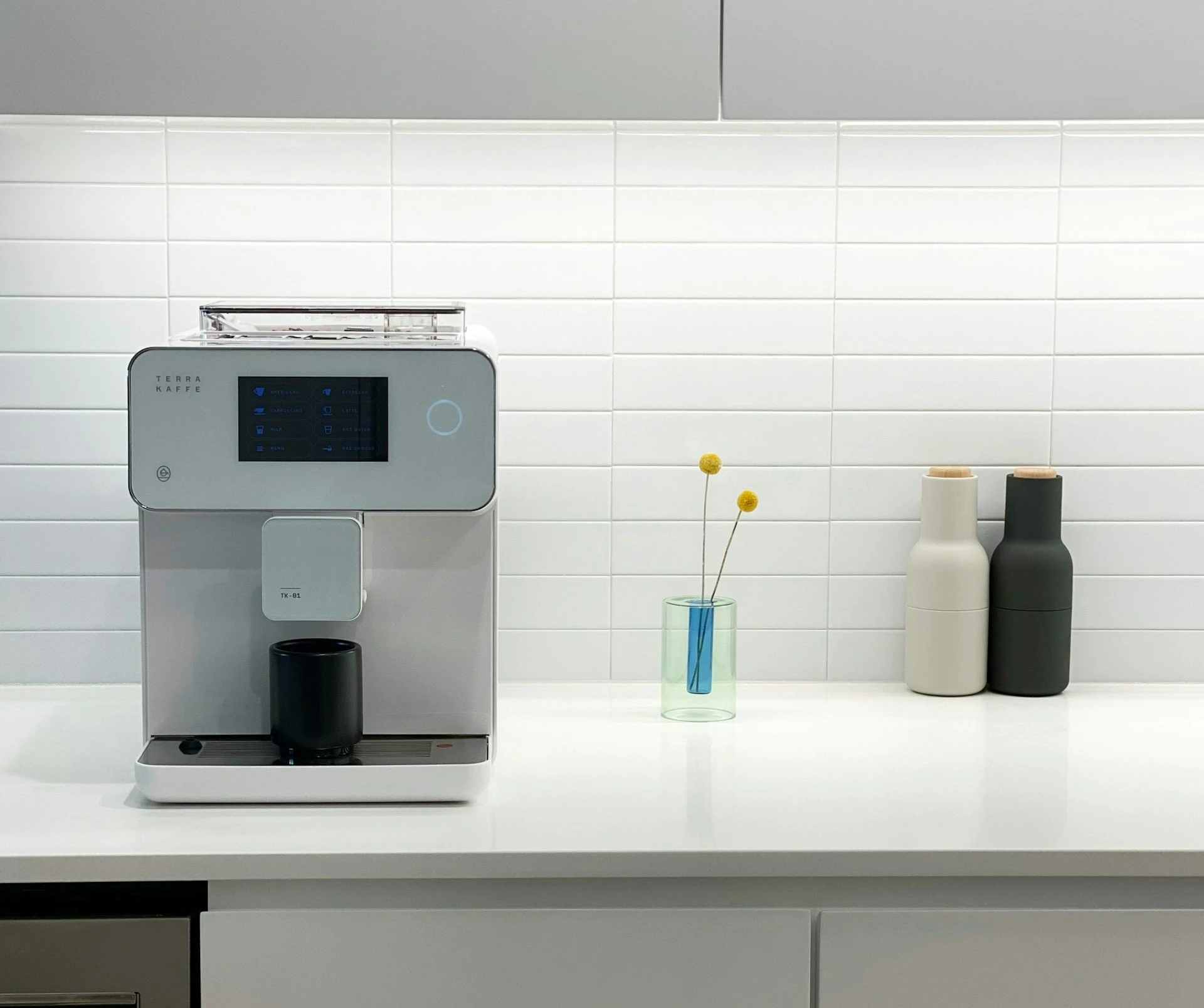
Small kitchens punish espresso gear that looks compact on paper but takes up a full “station” once you actually use it. The best pick is usually the machine that keeps your daily workflow tight: easy access to the water tank and drip tray, enough clearance under cabinets, and a milk routine that doesn’t turn into a countertop takeover.
Quick Picks: Compact Machines That Don’t Waste Counter Space
These picks are organized by real-life small-kitchen routines: machine-only espresso, slim-width fit, all-in-one setups that replace a separate grinder, and super-automatics that keep mess inside the machine. Use the jump links to go straight to the model that matches your routine.
-
Best Overall Compact Milk Drinks: Breville Bambino Plus (BES500)
↓ Jump to Review -
Best Compact Machine-Only: Breville Bambino (BES450)
↓ Jump to Review -
Best Slim-Width Footprint: De’Longhi Dedica (EC685 / EC885)
↓ Jump to Review -
Best Upgrade Path on a Small Counter: Gaggia Classic (Pro platform)
↓ Jump to Review -
Best All-in-One Value: Breville Barista Express (BES870XL)
↓ Jump to Review -
Best Assisted Consistency: Breville Barista Express Impress (BES876)
↓ Jump to Review -
Best Guided All-in-One Workflow: De’Longhi La Specialista Arte (EC9155 / EC9355)
↓ Jump to Review -
Best Press-and-Go Super-Auto: De’Longhi Magnifica Evo (ECAM290.xx)
↓ Jump to Review -
Best Super-Auto Milk Convenience: Philips 3200 Series LatteGo (EP32xx)
↓ Jump to Review -
Best Store-Away Real Espresso: Wacaco Picopresso
↓ Jump to Review -
Best Zero-Mess Capsule: Nespresso Essenza Mini (OriginalLine)
↓ Jump to Review
Small-Kitchen Checklist (measure before you buy)
“Compact” should mean easy access, easy cleanup, and no cabinet headaches. Measure the real space and plan for the station footprint (hands, cups, wiping), not only the base.
- Width: If your counter is a narrow strip, slim machines matter more than depth.
- Depth: Leave room to pull cups in/out and remove the drip tray.
- Top clearance: Hoppers and water tanks often need extra vertical space under cabinets.
- Front access: Refilling and emptying should work without dragging the machine forward.
- Workflow clutter: Decide if a grinder and tools can live in a cabinet, or if you need an all-in-one.
The shortlist: best espresso machines for small kitchens
Each pick below is chosen for real small-kitchen constraints: access, clearance, cleanup, and how much station space the workflow needs.
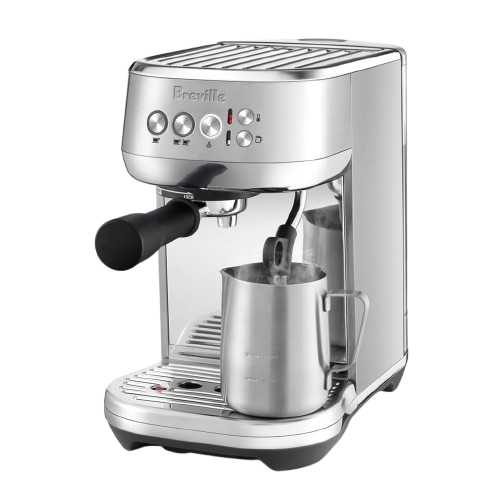
1) Breville Bambino Plus (BES500) — Best compact milk drinks without a bulky station
Bambino Plus is the most practical small-kitchen default: compact in daily use, fast warm-up, and auto-steam that makes milk drinks consistent without extra gadgets.
Why it works in small kitchens
- Quick heat-up and simple controls: you can make a weekday latte without leaving the machine on for 20–30 minutes.
- Auto-steam assistance (with manual option): consistent milk texture even if your technique is still developing.
- Small accessory footprint: a compact 54mm workflow means less “gear sprawl” on the counter.
Real trade-offs
- No built-in grinder: the machine is only as good as the grinder feeding it.
- Less tolerance for sloppy puck prep: once you use non-pressurized baskets, distribution and tamp consistency matter.
Who it is for
You want a compact espresso machine that can reliably make milk drinks, and you value a fast, repeatable routine more than deep tinkering.
Who should skip it
You want a built-in grinder, you plan to chase ultra-light roasts with extended profiling, or you prefer a large 58mm ecosystem from day one.
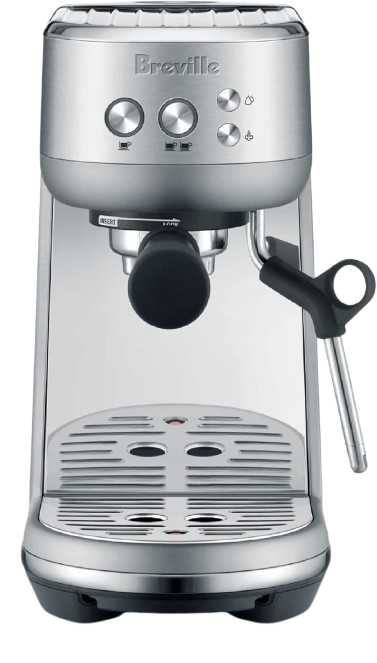
2) Breville Bambino (BES450) — Fast, truly compact machine-only espresso
Bambino is the compact machine-only pick when you already have (or can store) a capable grinder. It keeps the counter clean and the workflow fast.
Why it works in small kitchens
- Compact body that still behaves like a real espresso machine (not a toy): shots can be genuinely excellent with a good grinder.
- Fast warm-up and a straightforward workflow: minimal friction for daily espresso.
- Manual steam wand: capable of true microfoam once you learn the basics of stretching and rolling.
Real trade-offs
- Manual milk has a learning curve: your first week of milk drinks will be inconsistent.
- Still requires a real espresso-capable grinder for non-pressurized baskets.
Who it is for
You want the smallest possible machine that can still produce real espresso, and you don’t mind that the grinder choice determines most of the final cup quality.
Who should skip it
You want one-button milk drinks, you dislike hands-on steaming, or you want an all-in-one box that keeps everything on the counter in a single footprint.
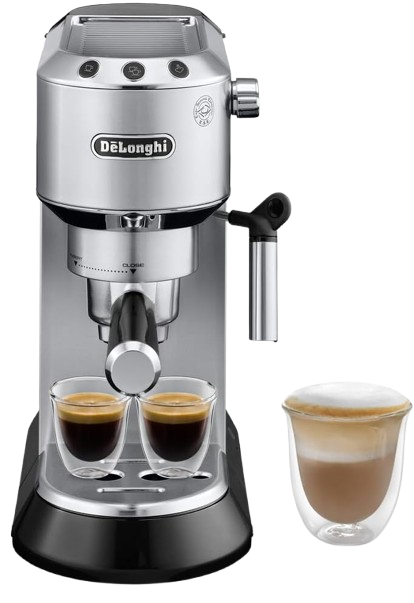
3) De’Longhi Dedica (EC685 / EC885) — Slim-width pick when counter frontage is the bottleneck
Dedica is the slim-width solution for counters where width is the bottleneck. It’s built for simple espresso-style drinks with minimal mess.
Why it works in small kitchens
- Very slim footprint: helps when counter frontage is the limiting dimension, not depth.
- Beginner-friendly espresso-style workflow: easy to get a decent result without a full grinder-and-dial-in routine.
- Quick to set up and put away: the whole machine feels designed for casual daily use, not an espresso hobby bench.
Real trade-offs
- Less “dial-in headroom” than enthusiast-focused machines: it’s not the best platform for chasing perfect extractions.
- Milk texture is functional, not specialist-level: latte art microfoam is harder to consistently achieve.
Who it is for
Your kitchen is tight on width, you want a simple espresso-style routine, and you care more about convenience than experimenting with grinders, baskets, and advanced technique.
Who should skip it
You want a classic enthusiast platform with lots of upgrade options, or you already own a strong espresso grinder and want to push espresso quality as far as possible.
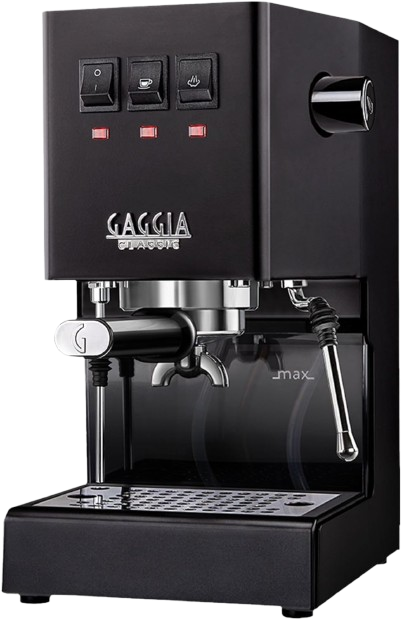
4) Gaggia Classic (Pro platform) — Small-footprint classic with a real upgrade path
Gaggia Classic is a compact, traditional workflow machine with a big learning/upgrading ecosystem. It’s small enough for a coffee corner, but hands-on by design.
Why it works in small kitchens
- Real espresso workflow in a relatively compact chassis: you’re learning the same core steps used on bigger machines.
- Strong accessory ecosystem: the 58mm world is broad, and many tools are widely available.
- Simple, serviceable design: easier to maintain long-term than many feature-heavy machines.
Real trade-offs
- Single-boiler reality: switching between brewing and steaming adds time, especially for multiple milk drinks.
- Warm-up is slower than “instant” thermo systems: it rewards a bit of patience for stable results.
Who it is for
You want a compact machine with a classic feel, you’re willing to learn a more hands-on routine, and you like the idea of gradually refining espresso quality rather than pressing a one-button latte.
Who should skip it
You want fast back-to-back milk drinks, you want minimal learning curve, or you need a “press-and-go” routine for busy mornings.
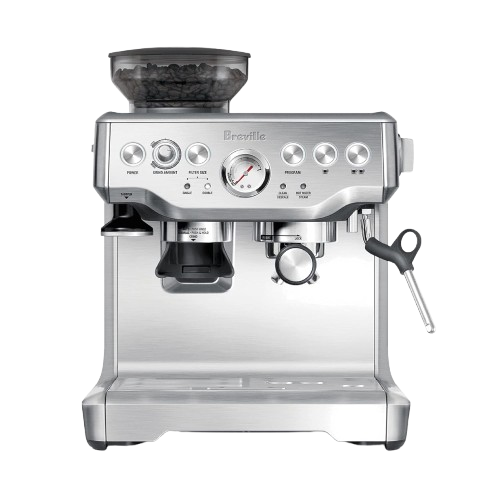
5) Breville Barista Express (BES870XL) — All-in-one value that reduces counter clutter
Barista Express is the all-in-one value pick: one footprint instead of a separate grinder and machine. In small kitchens, replacing two devices can free space overall.
Why it works in small kitchens
- All-in-one counter logic: one footprint instead of a separate grinder + espresso machine.
- Convenient daily workflow: grind, dose, and brew without moving between devices.
- Good “first real setup” for small homes: you can learn espresso fundamentals without buying multiple boxes.
Real trade-offs
- Built-in grinder is competent, not elite: it can be the limiting factor as your palate improves.
- Top-access hopper needs clearance: if you’re under cabinets, refilling can be awkward.
Who it is for
You want one machine that covers espresso and grinding in a single unit, and you value counter simplicity over squeezing the last few percent of shot quality.
Who should skip it
You already own a great grinder, you want to keep beans in airtight single-dose portions, or you have low cabinet clearance directly above the machine.
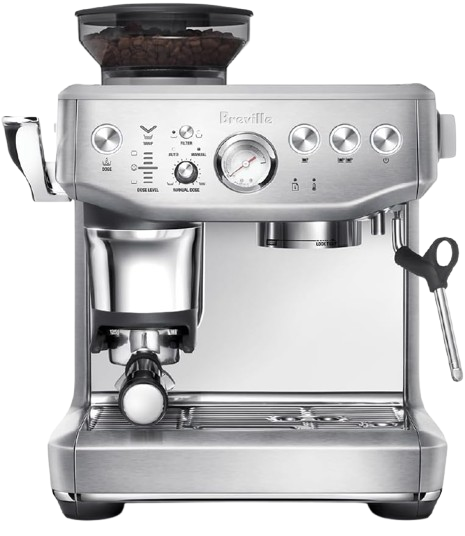
6) Breville Barista Express Impress (BES876) — Assisted dosing/tamping for shared kitchens
Express Impress adds assisted dosing/tamping to make results more repeatable—especially useful in shared kitchens where not everyone wants to learn puck prep.
Why it works in small kitchens
- Assisted tamping reduces mess and inconsistency: less channeling caused by uneven pressure and puck prep.
- Fewer extra tools: the machine handles steps that otherwise require a separate tamper, dosing funnel, or routine tweaks.
- Better for shared kitchens: one person can do the careful thing; another can still get a decent result quickly.
Real trade-offs
- More built-in complexity: more parts and mechanisms than a simple machine-only setup.
- Still tall and hopper-based: clearance under cabinets remains a consideration.
Who it is for
You want an all-in-one that makes espresso more repeatable, especially if multiple people will use it and you don’t want the counter to fill with “fix the puck” accessories.
Who should skip it
You want a minimalist, repair-simple machine, or you prefer a separate grinder and a more modular upgrade path.
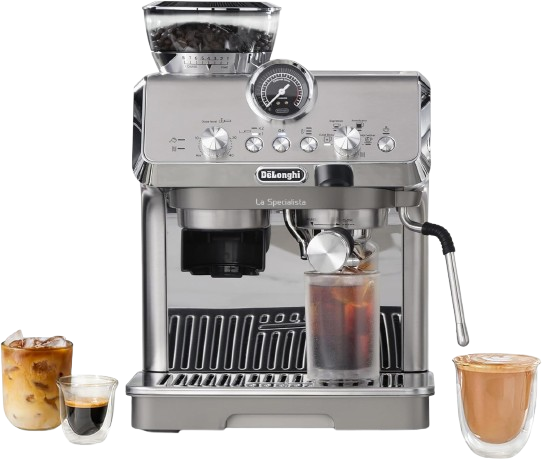
7) De’Longhi La Specialista Arte (EC9155 / EC9355) — Guided all-in-one workflow with fewer messy steps
La Specialista Arte is a guided all-in-one that keeps steps tidy: grind, dose, brew, steam—without a drawer full of accessories.
Why it works in small kitchens
- Integrated grinder keeps the routine in one footprint: fewer loose items on the counter.
- Guided dosing/tamping tools help reduce beginner errors without requiring a drawer of accessories.
- Strong “coffee corner” behavior: easier to keep the area clean after each drink.
Real trade-offs
- All-in-one lock-in: if you outgrow the grinder side, you can’t swap it independently.
- Still needs overhead space for hopper access and cleaning.
Who it is for
You want a guided all-in-one that keeps the workflow compact and organized, and you care about reliable cappuccinos/lattes without buying separate gear.
Who should skip it
You already own a high-end grinder, you want a modular setup, or you need very low top clearance under cabinets.
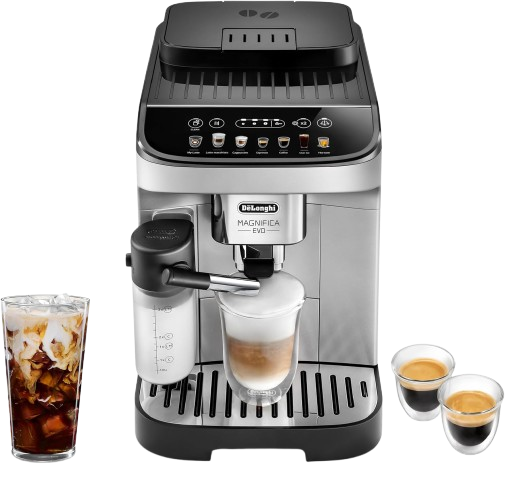
8) De’Longhi Magnifica Evo (ECAM290.xx) — Best press-and-go choice for tiny kitchens
Magnifica Evo is the press-and-go option: fast, consistent espresso-style drinks with most mess contained inside the machine.
Why it works in small kitchens
- Press-and-go routine: no grinding, dosing, tamping, or knocking out pucks by hand.
- Contained mess: grounds and pucks stay inside the machine; the counter stays calmer.
- Built-in grinder and brewing system: one appliance replaces an entire espresso workflow.
Real trade-offs
- The cup style is “super-auto espresso,” not a café-style semi-auto shot: texture and intensity differ.
- Maintenance is mandatory: you’re trading manual puck prep for cleaning cycles and internal parts care.
Who it is for
You want fast, repeatable espresso-style drinks in a small kitchen, and you care most about convenience, cleanliness, and low friction.
Who should skip it
You want to learn espresso craft, you want true microfoam steaming control, or you dislike the maintenance routines of super-automatics.
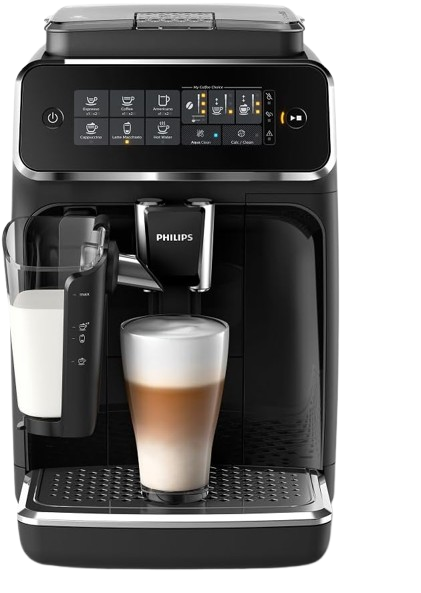
9) Philips 3200 Series LatteGo (EP32xx) — Auto milk convenience with minimal parts to clean
Philips 3200 LatteGo prioritizes easy milk cleanup. If milk drinks are daily and space is tight, fewer milk parts is a real advantage.
Why it works in small kitchens
- Very easy milk cleanup: fewer tubes and fiddly parts compared to traditional auto-milk systems.
- One-button milk drinks: good for small kitchens where time and counter space are limited.
- Self-contained workflow: grinder, brew unit, and puck handling stay inside the machine.
Real trade-offs
- Milk texture is convenient, not artisanal: great for daily lattes, less for latte art practice.
- Espresso style leans milder than semi-auto machines with a dedicated grinder and puck prep.
Who it is for
You want milk drinks with minimal cleanup, you value reliability over experimentation, and you want a machine that keeps your counter from turning into a project.
Who should skip it
You want to practice steaming technique, you want café-style shot dialing, or you prefer the simplicity of fewer internal mechanisms.
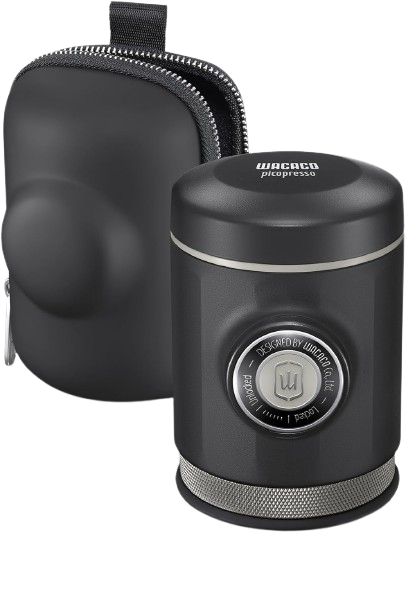
10) Wacaco Picopresso — Store-away “real espresso” for extreme small spaces
Picopresso is “store-away espresso”: the brewer lives in a drawer and comes out only when needed. It’s the extreme-space solution, but fully manual.
Why it works in small kitchens
- Store-away footprint: the device itself doesn’t live on the counter.
- No bulky appliance: ideal for dorms, micro-apartments, and shared kitchens with limited outlets.
- Real espresso-style extraction when paired with an espresso-capable grinder.
Real trade-offs
- You still need hot water (kettle) and a capable grinder for best results.
- One drink at a time: it’s not built for rapid back-to-back service.
Who it is for
You cannot dedicate permanent counter space, you’re okay with a hands-on routine, and you want real espresso-style coffee rather than capsules.
Who should skip it
You want fast, effortless daily milk drinks, or you dislike manual steps like weighing, tamping, and cleaning after each shot.
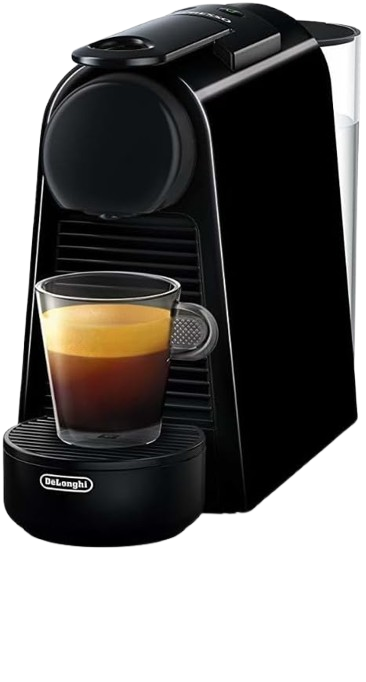
11) Nespresso Essenza Mini (OriginalLine) — Zero-mess espresso-style drinks when convenience wins
Essenza Mini is the smallest, cleanest path to an espresso-style drink. It’s capsule convenience, not a semi-auto espresso hobby setup.
Why it works in small kitchens
- Minimal footprint: one of the easiest ways to add espresso-style drinks to a tiny kitchen.
- Very low mess: no loose grounds, no puck knockouts, minimal cleanup.
- Fast routine: heat-up and drink prep are quick and predictable.
Real trade-offs
- Cup quality is capsule-based: less nuance, less control, and a different texture than true espresso.
- Ongoing capsule cost and waste: convenience comes with recurring expense and packaging.
Who it is for
You want the smallest, cleanest espresso-style routine possible, and you prioritize speed and simplicity over craft and control.
Who should skip it
You want real espresso dialing, you already own a good grinder, or you’re trying to build a long-term espresso hobby setup.
Pick by your routine
In a small kitchen, the “best” espresso machine is usually the one that keeps your daily routine simple. Use your routine as the filter first, then your taste preferences second.
Milk drinks, minimal fuss
If your default drink is a latte or cappuccino and you want a compact semi-auto workflow, Bambino Plus is the most practical balance of speed, footprint, and milk results. If you want a cleaner, shared-kitchen routine with fewer manual steps, a super-automatic like Philips 3200 LatteGo keeps milk handling contained and repeatable.
Smallest semi-auto “espresso corner”
If you already own a capable grinder (or can store one away), Bambino is the smallest semi-auto path that still feels like real espresso. If width is the hard constraint and you need a slim machine, Dedica is the easiest fit — just be honest about its limitations and treat it as a convenience-first option.
One unit instead of machine + grinder
If a separate grinder would permanently occupy your counter, an all-in-one can actually save space and reduce mess. Barista Express is the value default, Express Impress reduces beginner error in shared kitchens, and La Specialista Arte is a guided workflow for people who want structure more than tinkering.
If you’re leaning toward an all-in-one, this deeper shortlist helps you compare the trade-offs clearly: Best Espresso Machines With Built-In Grinder — A practical shortlist of espresso machines with built-in grinders: semi-automatic all-in-ones and super-automatic bean-to-cup picks, with clear workflow trade-offs.
Press-and-go daily espresso (cleanest routine)
If you want fast coffee with minimal cleanup, super-automatics are hard to beat. Magnifica Evo is the straightforward “weekday workhorse.” Philips 3200 is similarly practical when you want repeatable results across users. The trade-off is cup style: you give up the finer tuning and peak texture you can get from a dialed-in semi-auto setup.
Store-away option (real espresso, tiny footprint)
If you truly cannot dedicate counter space, Picopresso is the “put it in a drawer” alternative that still rewards good coffee and technique. It’s slower and more manual, but it solves the counter-space problem better than any countertop machine.
Space-saving add-ons that actually help
Accessories can either clutter a small kitchen or make it feel organized. Keep it to a few items that reduce mess and speed up cleanup.
- Compact knock solution: a slim knock tube or a small bin prevents wet puck chaos on your counter.
- One small milk pitcher: a compact pitcher rinses faster and stores easier than a large café pitcher.
- Two microfiber towels: one for steam wand + drip tray area, one for hands — this keeps the station clean.
- A small, fast scale: the smallest useful scale is the one you’ll actually leave accessible.
- Vertical cup storage: stacking frees counter frontage and keeps the station tidy. Stackable Coffee Cup Sets with Stands — A practical shortlist of stackable coffee cup sets with stands—what to look for, which styles fit espresso vs milk drinks, and space-saving picks that keep your counter tidy.
FAQ
What matters most for small kitchens: width or height?
Usually height and access. A machine can be “compact” on paper but annoying in practice if you need top clearance to remove the water tank, refill a hopper, or clean. Front-access tanks and trays are the real small-kitchen feature.
Is an all-in-one actually smaller?
It can be, because it replaces a separate grinder that would otherwise live on the counter. If you can truly store a grinder away, machine-only can be smaller. If not, all-in-one often wins in real day-to-day space use.
Do super-automatics make sense for small kitchens?
Yes if you prioritize speed, cleanliness, and consistency across users — and accept that the cup style is different from a dialed-in semi-automatic setup.
Can a slim machine still steam well?
Sometimes, but power and control usually improve with more robust machines. If milk texture is a priority, prioritize the machine that makes your milk routine easy, not the one that’s merely narrow on paper.
How do I keep cleanup manageable?
Build it into the routine: quick rinse the basket/portafilter, wipe the drip tray area, purge milk tools immediately, and keep a small tray for the messy steps. In a small kitchen, “clean as you go” isn’t a preference — it’s what makes the setup livable.
Bottom line
For compact milk drinks with a semi-auto workflow, Bambino Plus is the safest pick. If you already have a grinder and want the smallest semi-auto footprint, Bambino is the most space-efficient move. If you want fewer boxes on the counter, an all-in-one like Barista Express (or Express Impress) is usually the practical compromise. If you want the cleanest weekday routine with minimal friction, a super-automatic like Magnifica Evo or Philips 3200 is the most sustainable daily choice.